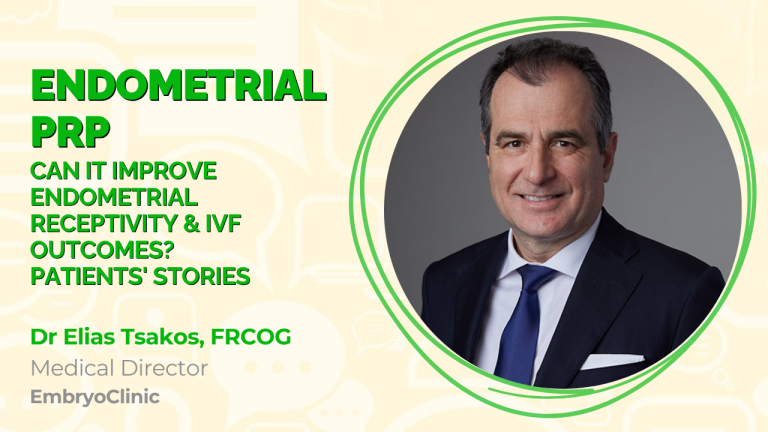


During this live Q&A, 2 top fertility experts discussed the potential advantages of IVF add-ons and how to determine if they are suitable for your individual case. The doctors discussed PGT-A testing and how to assess whether they are suitable for your personal fertility journey. Fertility Experts also discussed microbiome testing EMMA/ALICE, and so on.
Featuring Experts:
Dr Federica Moffa, MD, PhD, Medical Director of Fertilab, Spain.
Dr Elias Tsakos, MD, FRCOG, Medical Director of Embryoclinic, Greece.
Hosted by: Dr Shabana Bora, MBBS, MRCOG, Consultant Gynaecologist, Fertility Specialist, Co-founder of ALMA fertility, UK.
Dr Federica Moffa, Fertilab, Spain: There is a big debate about what we call implantation failure or repeated implantation failure. Here we have two very good PGT-A normal embryos, and the patient has already done most of the tests that could be done.
We don’t know what the autoimmune disorder is, so I would suggest seeing an immunologist. At our clinic, we have an immunologist who specialises in these kinds of cases. Sometimes the immunologist might suggest testing for the HLA-KIR profile or look for a reason for this implantation failure.
Dr Elias Tsakos, Embryoclinic, Greece: I think Federica covered most of the key points. My view is simple. Firstly, PGT-A normal embryos do not guarantee implantation. We have to be very clear about that. DNA integrity is one part of the equation and one element of the possibility of an embryo being able to implant. I don’t think we, as doctors and scientists, have communicated that enough to our patients. One of the reasons patients ask for PGT-A is the belief that it will solve all embryo problems, but that’s not the case.
Secondly, before we move to more complex areas like immunology — and rightly, as Federica said, they have an immunologist, and so do we — I need to ask my colleagues in a multidisciplinary setting because there are many aspects I don’t fully understand as a gynaecologist. But before we go into the more advanced tests, we should rule out common causes of failure.
For example, endometrium issues. I’d like to make two points:
It is written in both the ESHRE and ASRM guidelines that hysteroscopy may be appropriate for repeated implantation failure. Let’s not forget the endometrium. Let’s not overlook large reasons for failure — such as big fibroids or polyps. Traditional two-dimensional ultrasounds may not give us the full picture. A very careful ultrasound scan of the uterus might give us more information than standard tests. To conclude — if we hear galloping in the distance, it’s more likely to be a horse than a zebra.
Dr Elias Tsakos, Embryoclinic, Greece: Absolutely. In my clinic, we apply a mix of international perspectives. I would probably say that, due to my background, the majority are UK guidelines that we stick to, but sometimes we enrich them with a bit of European flavour.
I’ve been around for more than 30 years, so I’ve been through all the phases of PGT-A. I believe we, as a scientific world, were very quick to believe that PGT-A was the solution to every problem. And of course, we created more problems than we solved. That has damaged the status quo now, because on one hand, we have patients believing that PGT-A is the solution to every problem. Maybe our American colleagues are not helping very much in that, because they liberally apply PGT, as we all know, and have done for years. There was a trend to do it in the States, where it’s largely split cycle and PGT-A for everybody.
To be honest, I have always been guarded. Although I’m a surgeon by training, I’ve always been very conservative. I was always wary of the potential side effects, or damage, or unnecessary intervention, or unknown future effects on the unborn child. Also, the skill of the embryologists, because we’ve seen embryologists damaging embryos in the past. So my stance at the moment is very simple: PGT-A is a very useful tool and, in my opinion, should be used selectively.
Dr Elias Tsakos, Embryoclinic, Greece: There’s a very clear possibility of abnormal sperm affecting the integrity of the DNA. I would be very sceptical and probably would not offer it. Actually, in Greece, it’s illegal to offer PGT-A on egg donation, or on women under the age of 35 who haven’t had more than two or three miscarriages.
I would only offer PGT-A in a very high-tech setting, by a very experienced, licensed embryologist, in a high-tech environment and only if there’s an indication, which would be repeated implantation failures, miscarriages, or maternal age. To me, the clearest indication is advanced maternal age, definitely over 40, perhaps over 38 as well.
Dr Federica Moffa, Fertilab, Spain: I agree it depends. In Spain, I think that most of the centres apply PGT-A when it’s indicated. I agree with Dr Tsakos that the main indication is advancing maternal age. Actually, in our real world, in our practice, we propose PGT-A to patients over 37, I mean 38 or above or in repeated implantation failure, or repeated cycles with miscarriage or severe male factor.
We also found that in fact sometimes in egg donation we applied it for severe male factor, and we found a high proportion of abnormal embryos in the donor’s eggs when the sperm is really pathological. I agree that you have to have a very skilled biologist team that can guarantee a high survival rate of the embryos through the manipulation and procedure because otherwise, the benefits of the screening are not compensated by the risk of losing embryos to the procedure. We all know that for many years we discarded embryos that were mosaic embryos, and in the end, they probably would have given a live birth.
Dr Federica Moffa, Fertilab, Spain: In Spain, we can apply PGT-A to everybody if we want. We don’t have restrictions. I discuss with the patient. Of course, I put on the table the cost-benefit. We continue with single embryo transfer — we indeed do single embryo transfer really to everybody. If the patient is very young, and she had 5 blastocysts, and she just had a first failure, of course, I will not agree to go for PGT-A.
If she has a second failure and has 3 embryos left, we will discuss the cost-benefit of testing those three embryos and doing PGT-A, but also with the risk of losing embryos in the procedure. We discuss with the patient. I don’t just say, “You are 33 and we don’t do PGT-A.” I discuss with the patient, I would say.
Dr Elias Tsakos, Embryoclinic, Greece: My advice on patients of a little bit more advanced female age — roughly over 42 or 43 — is definitely always have a PGT-A. The reason why I do this is that I want to have a pragmatic picture of the chances of this particular patient or couple. In that patient, my clear answer would be yes, definitely. Why is that? Because the chance of aneuploidy — the chance of an abnormal embryo — is very high. It could be as high as 80–90%. And I would like to know that.
In my opinion, failure is not the biggest complication in an advanced-age IVF patient. The biggest complication is a miscarriage, which, apart from the emotional risk, has the physical risk of damaging the uterus. If it’s a later miscarriage, the biggest complication is the birth of a child that’s been undiagnosed with a chromosomal abnormality. I am very clearly suggesting PGT-A on every single embryo before I transfer it, to protect them from that risk.
Dr Federica Moffa, Fertilab, Spain: I’m in between. Let’s say that, of course, when the patient steps in, I would never have a patient 45 years old with an embryo left without PGT-A testing. If it’s the case, I agree with you. The cost and the risk of losing this embryo — knowing that the most probable outcome is that the embryo will not implant — or if there is a pregnancy, the patient should be aware that she has a very high risk of miscarriage.
So again, I discuss with the patient, but possibly we leave nature to do its work and see what’s going on. This is a strategy because we have just one. If she had 2 or 3, of course, I would advise doing PGT-A. But with just one, we can leave Mother Nature to do her job.
Dr Federica Moffa, Fertilab, Spain: I’m not an embryologist, but we can say that blastocysts should reach a certain stage, a certain number of cells and a certain degree of expansion to make the biopsy possible without harm. There is a certain degree of expansion, and the number of cells in the trophectoderm, the external part, should be good. Also, the inner cell mass should be clearly visible.
In terms of scoring, if we use the Gardner score, probably good-quality embryos are more likely to be biopsied. But sometimes our biologists, if they can biopsy an embryo with a medium-quality score, will do it.
Dr Federica Moffa, Fertilab, Spain: Not always. The biologists have their criteria, but CC embryos are not always biopsied in our clinic.
Dr Elias Tsakos, Embryoclinic, Greece: I’ve never used any of those tests here. I don’t know if I was a little bit backwards or if I wasn’t convinced by the data, so I have no experience personally. But now, as we all know, it’s gone out of fashion. I don’t think there’s any question about this.
Now, in regard to other tests of the endometrium — I’m a huge fan of the endometrium. I believe we’ve neglected the endometrium. This is our duty as gynaecologists: to reclaim its importance. Going back into the history of IVF, I think we’ve allowed our wonderful embryologists to dominate the scene of research, and as gynaecologists, we haven’t held our ground in exploring further the implantation area — the endometrium — its immunohistochemistry, its integrity, its biopsy, and so forth.
To answer clearly: I believe there is a place for microbiome testing. I even believe there is a place for standard PCR testing together with biopsy. I really think that endometritis is something hugely neglected. Again, it’s our responsibility as gynaecologists, and a little bit the responsibility of the histopathologists who are receiving the samples and are only reporting whether it’s malignancy or hyperplasia. They haven’t added this marker that costs a few pounds or euros to check for endometritis and all that.
Of course, this is not for everyone. It’s for patients with suspected endometrial damage — patients with miscarriages, hysteroscopic surgery, polyps, fibroids, abnormal endometrium — I think we owe them some explanations.
Dr Federica Moffa, Fertilab, Spain: Yes, of course, we are in Spain — the home of EndomeTRIO, etc. I have to say that for many years, I was not a big fan. But here, after one implantation failure, it was immediately recommended, and all the patients were asking, so it was quite difficult to refuse.
Now, as you say, it’s a little bit out of fashion, especially the ERA, but I’m a strong believer in microbiome testing. As Dr Tsakos says, I think we underestimated the prevalence of endometritis. Because it’s asymptomatic, we have many patients who, even after delivery, come back for a second child using embryos from the same cycle. After delivery and maybe some surgery, we find out that the failure is related to endometritis.
Dr Elias Tsakos, Embryoclinic, Greece: First of all, it depends on whether it’s diagnosed or suspected. Many times, patients come with a label of endometriosis, and it’s not proven. Other times, we think we’ve excluded endometriosis, and it is present.
Endometriosis has to be taken very seriously, especially since perhaps 50% of our infertility patients may have some degree of it. Endometriosis may cause symptoms or may not cause symptoms. A symptom may be infertility. It may be implantation failure through inflammation. It could be a miscarriage or ectopic pregnancy through tubal damage. How long is a piece of string? Endometriosis has to be considered.
To diagnose, thankfully, ultrasound scanning can be pretty accurate — not 100%, but very close. If there’s any doubt, then perhaps additional testing like MRI scanning or even laparoscopy is needed.
Dr Federica Moffa, Fertilab, Spain: With endometriosis, sometimes we decide to pre-treat before IVF by putting the patient under GnRH analogues for one or two months. Normally, those are patients who also have associated adenomyosis. So, diagnosis is the first step. A very good assessment is needed to check for the presence or absence of adenomyosis. As for add-ons, sometimes we use analogues or a pill — a progestin pill — to prepare before stimulation.
Dr Federica Moffa, Fertilab, Spain: Almost none. The short answer is almost none.
Dr Elias Tsakos, Embryoclinic, Greece: I would definitely say PGT-A for over 45 years, because this will guide us and help us make an informed decision if we keep going or not with our own eggs.
One of the challenges with women in this age group, especially the fertile ones — the ones who keep producing eggs and good quality embryos — is how far we go and when we stop. I think patients deserve to know the genetic integrity of the embryo. So I would suggest PGT-A be tested on every single embryo before embryo transfer.
Dr Federica Moffa, Fertilab, Spain: If you ask me, in my real world, we don’t do IVF when the patient is over 44. Even if the ovarian reserve of the patient is very good. Of course, in very exceptional cases where we perform IVF in 44–45-year-old patients, PGT-A is not only the only way to eventually find a normal embryo and have a chance of success, but on the other hand, it is a way for the patient to understand that this is probably not the way to achieve a pregnancy.
Sometimes it is a strategy for the patient to understand that she probably needs to go for egg donation.
Dr Federica Moffa, Fertilab, Spain: In terms of a global standard, we can always refer, especially in Europe, to the ESHRE guidelines. We can also look at the ASRM. The ESHRE guidelines are very well written and based on scientific evidence. So I mainly refer to the ESHRE guidelines. A global standard does not exist to my knowledge. Scientific societies are those we can look at to have a guide.
Dr Federica Moffa, Fertilab, Spain: Immune modulating — I will try to gloss over the topic of immune therapy. There are two big conditions. One is where the patient really has an immune disease or autoimmune condition. So we will use corticoids, anticoagulants, and different treatments when the patient really has a proven immunology disorder or antiphospholipid condition. Otherwise, there is very little evidence to use them.
Dr Elias Tsakos, Embryoclinic, Greece: I suspect you are referring to natural killer cells, uterine natural killer cells, TNF factors, or antinuclear antibodies. I would agree with Federica — in the absence of a real autoimmune disease like lupus or scleroderma, the chance of an isolated immune factor is extremely small. We can certainly investigate, but at the moment, the evidence is not there. We don’t discard those possibilities, but the chance is small in the absence of real-life immune disorders.
Dr Federica Moffa, Fertilab, Spain: We actually, in our practice, really look at the male factor. We don’t neglect it, especially because we find patients with IVF failure who, in the end, come to Spain for egg donation after many years of failures. Then we have an advanced maternal age factor, but we find poor results even with egg donors. So we learned that the male factor is very important to be tested.
Of course, we ask for DNA fragmentation in cases of very poor sperm count or oligozoospermia. We ask for both single and double-strand DNA fragmentation. We have two andrologists in the team, and the patient receives consultation and antioxidant treatments. In some cases, we perform sperm selection with microfluidic techniques. Then we do PGT-A if the fragmentation is still very high.
Dr Elias Tsakos, Embryoclinic, Greece: I agree 100%. We do exactly the same. But also, perhaps we are a little more cautious when we have unexplained infertility. Sometimes, even with normal sperm, we may find abnormal DNA fragmentation. We also value oxidative stress testing.
We have a specific sperm clinic in our lab, and our biologists have found a correlation between oxidative stress and sperm performance. This is very important for us. These are also markers for general health in our men. Because we’re dealing more often with reproductively older men — 50, 55, 60 — the relevance is even bigger.
Just like gynaecologists may have neglected the anatomy of the woman, I think biologists may have neglected the male factors. Perhaps a wonderful message from this webinar is: don’t forget that biology is 50% male, 50% female. I’m very pleasantly surprised that Federica has 2 andrologists. Perhaps we can recruit one of them. In Greece, they are very rare.
Dr Federica Moffa, Fertilab, Spain: I totally agree, especially in the case of advanced paternal age. We actually presented at the ESHRE congress in Barcelona a poster showing that the results of egg donation cycles are inversely correlated with paternal age.
Dr Elias Tsakos, Embryoclinic, Greece: If I can comment here, my wife is a breast surgeon, and she has threatened to divorce me if I put anyone through IVF — anyone, regardless of age—over the age of 35 without proper breast screening.
Twice a year, we diagnose breast cancer through screening in women under 40 years old. The message is that sometimes women are stimulated, they get pregnant, they breastfeed, and they have breast cancer, undiagnosed. Although fertility hormones and pregnancy are not associated with breast cancer, pre-existing cancer could become more aggressive. So, equally important with, for example, cervical screening prior to IVF, in my opinion, is breast screening.
I know this is against the guidelines in the UK. I don’t know about Spain’s national screening guidelines. But if there’s a message here for patients, this is it.
Dr Elias Tsakos, Embryoclinic, Greece: In my opinion, definitely. There’s no doubt about that. And it’s not going to take a very long time. In my opinion, it will take less than 3 to 5 years.
Dr Federica Moffa, Fertilab, Spain: Maybe less — probably less. But it’s an algorithm. What we do with experience: we look at AMH, we look at the age of the patient, and we look at the antral follicle count. We look at different data, we put everything in our brain, and based on our previous experience, we set up a protocol.
It depends on which kind of stimulation we are doing, and for which purpose we stimulate the patient. It’s not the same if I have a 32-year-old woman who wants to freeze eggs for vitrification or a patient who just wants to have a fresh embryo transfer. So it depends. If we put all that data into artificial intelligence, it will come up with the perfect stimulation protocol.


+ 7 more answers

+ 4 more answers

+ 7 more answers

+ 3 more answers

+ 2 more answers
Necessary cookies are absolutely essential for the website to function properly. This category only includes cookies that ensures basic functionalities and security features of the website. These cookies do not store any personal information.
Analytical cookies are used to understand how visitors interact with the website. These cookies help provide information on metrics the number of visitors, bounce rate, traffic source, etc.
| Cookie | Duration | Description |
|---|---|---|
| _ga | 2 years | This cookie is installed by Google Analytics. The cookie is used to calculate visitor, session, campaign data and keep track of site usage for the site's analytics report. The cookies store information anonymously and assign a randomly generated number to identify unique visitors. |
| _gat_UA-38575237-21 | 1 minute | No description |
| _gid | 1 day | This cookie is installed by Google Analytics. The cookie is used to store information of how visitors use a website and helps in creating an analytics report of how the website is doing. The data collected including the number visitors, the source where they have come from, and the pages visted in an anonymous form. |
Any cookies that may not be particularly necessary for the website to function and is used specifically to collect user personal data via analytics, ads, other embedded contents are termed as non-necessary cookies. It is mandatory to procure user consent prior to running these cookies on your website.
Other uncategorized cookies are those that are being analyzed and have not been classified into a category as yet.
| Cookie | Duration | Description |
|---|---|---|
| _gat_FSQM52 | 1 minute | No description |
| cf_ob_info | No description | |
| cf_use_ob | No description |