

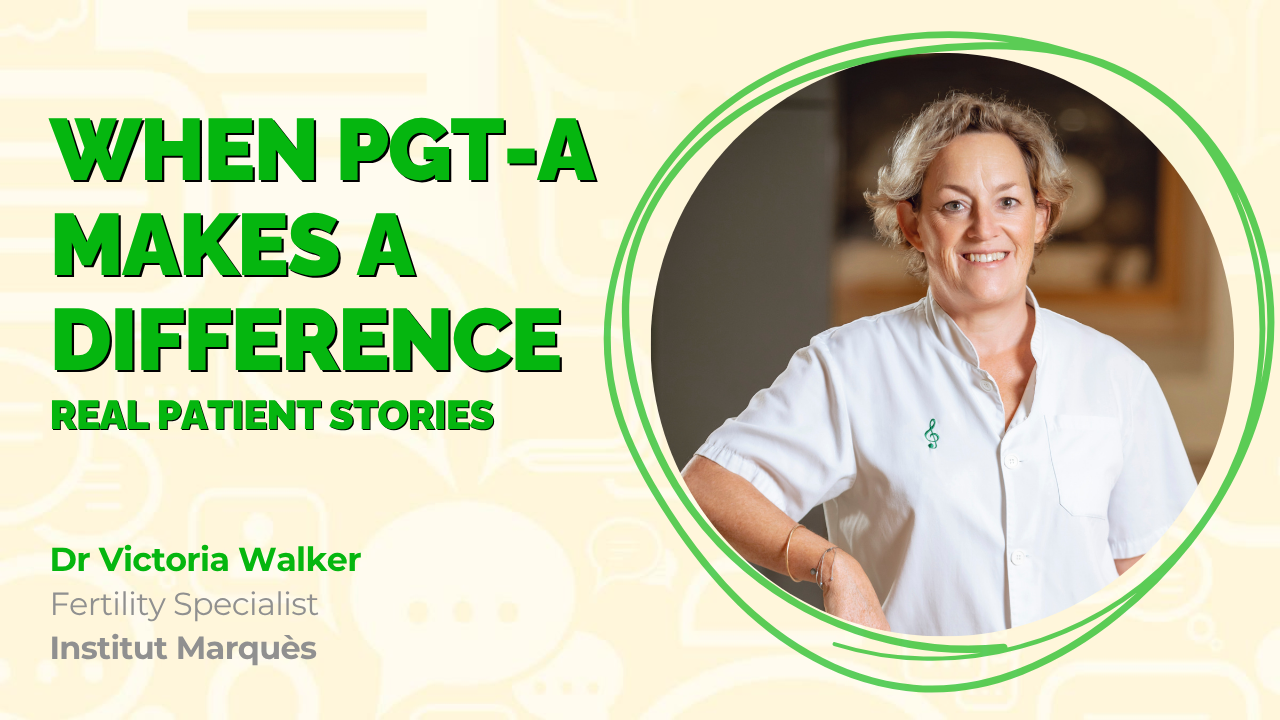
A genetically tested embryo may help some patients avoid repeated transfers that are unlikely to work, but PGT-A is not a guarantee of pregnancy, says Dr Victoria Walker, Fertility Specialist at Institut Marquès in Barcelona, Spain.
For people considering IVF, the appeal is straightforward: identify embryos with the expected number of chromosomes before one is transferred. Under a microscope, embryos can look similarly healthy while having very different genetic results.
Preimplantation genetic testing for aneuploidy (PGT-A) adds another layer of information to the decision about which embryo to transfer.
That information can be useful, particularly when infertility has lasted for years, previous IVF transfers have failed, or age makes chromosome abnormalities more likely. But the test has limits, costs, and results that are not always clear-cut. The right question is not simply whether PGT-A is available. It is whether the information is likely to change the choices a particular patient faces.
Embryos are generally tested at the blastocyst stage, about five days after fertilisation. At that point, the embryo has developed an inner cell mass, which will form the fetus, and an outer layer of cells that will later contribute to the placenta.
During the biopsy, the inner cell mass is avoided. A laboratory removes about 4 to 10 cells from the outer part of the blastocyst, amplifies the genetic material and analyses it. The embryo is then frozen while the laboratory produces a report.
The report may classify an embryo as:
A euploid result can help identify an embryo with a higher likelihood of being suitable for transfer, but it does not promise implantation or a live birth. PGT-A is also different from testing for a specific inherited condition. When one or both partners carry a known genetic illness, such as cystic fibrosis or sickle cell disease, other forms of preimplantation genetic testing may be considered.
PGT-A is most often discussed with patients who have infertility and may have a higher chance of producing aneuploid embryos. Common reasons include being about 38 or older, recurrent IVF failure, long unexplained infertility, poor sperm quality and infertility with no clear cause.
Age is one part of the picture, but it is not the only one. The proportion of aneuploid embryos increases from about age 36 onward in embryos assessed by PGT, while the number of euploid embryos tends to decrease as age increases. Abnormal embryos can also show more complex patterns with advancing age, including two, three or more abnormalities.
That does not mean every younger patient has chromosomally normal embryos, or that every older patient will have only abnormal ones. Very young women and women past their mid-thirties can both have a higher proportion of aneuploid embryos. PGT-A is not routinely recommended for everyone in the younger age group, generally under about 38, particularly when infertility has not yet been established.
Male-factor infertility can also affect the conversation. A younger woman whose partner has very poor sperm quality may still have a reason to consider testing if the couple has been trying for many years. Sperm fragmentation may be assessed with a COMET test, and a significant abnormality could support considering PGT even when the woman’s ovarian and reproductive evaluation appears reassuring.
For someone who is 38 and has not previously tried to conceive—for example, a single woman or a female couple who have not yet had the opportunity to try—there may be an argument for beginning without PGT-A and seeing how treatment progresses. The decision depends on the number of embryos expected, the time already spent trying, age, sperm factors and the couple’s priorities.
The difference between appearance and chromosome results can be striking. In one example, 5 embryos were analysed: 2 were abnormal, and 3 were euploid. The abnormalities included trisomy 10, meaning an extra copy of chromosome 10, and monosomy 10, meaning a missing copy.
The result is not a judgment about the quality of the patient’s body or the couple’s effort. It is information about the embryos available in that IVF cycle. For some patients, that information can make the next step more focused; for others, it may reveal that there are no embryos suitable for transfer and that another cycle would need to be considered.
A patient who is 43 had an AMH of 3.9 nanograms per millilitre, considered very high for her age. She and her 53-year-old partner had been trying naturally for one year, and both had normal karyotypes. IVF produced 22 eggs, 16 mature eggs, 12 embryos and seven blastocysts. Although all seven blastocysts appeared to have good Gardner scores, genetic testing found that every embryo was aneuploid.
The case shows why a strong ovarian reserve or attractive appearance under the microscope does not necessarily predict a euploid embryo. Without PGT-A, the couple might have needed to transfer embryos one at a time before learning that the available embryos were unlikely to succeed. Testing did not create a normal embryo, but it provided an explanation and avoided multiple transfers that would probably have failed or ended in miscarriage.
PGT-A may be particularly useful when a patient has already spent substantial time and money on treatment without producing a transferable embryo or sustaining a pregnancy. One 38-year-old patient had three years of infertility, two spontaneous miscarriages and a miscarriage after an IVF pregnancy. She and her 36-year-old partner had undergone three inseminations and five IVF cycles elsewhere.
Despite an AMH of 3.99, the earlier treatment produced a maximum of four eggs per cycle and only 1 blastocyst across 5 stimulation cycles. A different protocol produced 9 eggs, 7 mature eggs, 6 fertilised embryos and 5 blastocysts. Testing found 3 abnormal embryos and 2 euploid embryos. The first transfer of a euploid embryo resulted in a pregnancy with a heartbeat at about nine weeks.
The case does not prove that PGT-A will solve recurrent miscarriage or low embryo numbers. It does show how a change in treatment approach, combined with testing, can give a patient more than one embryo to evaluate and a clearer basis for choosing a transfer. A euploid result may also reduce the number of transfers needed to find an embryo with a reasonable chance of continuing to develop.
Younger age does not eliminate the possibility of a useful result. A 33-year-old patient and her 35-year-old partner had been infertile for 5 years. She had a very high AMH of 9.55, regular 32-day cycles and three spontaneous pregnancies, including one miscarriage and one ectopic pregnancy. An earlier IVF cycle produced 26 eggs, but only 2 day-5 embryos, and both cryotransfers failed.
A subsequent cycle produced 41 eggs, 35 mature eggs, 29 fertilised embryos and 11 blastocysts. Genetic testing identified seven euploid embryos and four aneuploid embryos. A baby was born after the third transfer of a euploid embryo. In this setting, the long duration of infertility and previous failed transfers provided a reason to consider PGT-A even though the patient was young.
Biopsy is invasive, although studies suggest that it does not appear to reduce the embryo’s later implantation potential. The price can be significant and varies according to the number of embryos biopsied. If only a small number of blastocysts develop, patients may need to weigh the potential value of information against the cost of testing and the possibility that no euploid embryo will be found.
PGT-A also has a reported error rate of 0 to 2%. The sample comes from a small group of cells on the embryo’s outer layer, not from every cell that will eventually develop into a fetus. Mosaicism can therefore make results more difficult to interpret, and different laboratories or clinics may classify some embryos differently.
A noninformative result does not necessarily mean that the embryo is abnormal or that the report is false. It often means that the amplification process did not produce an answer. A rebiopsy may be considered, but this is no longer automatically done in every case; depending on the circumstances, a clinic may discuss whether to transfer the embryo without repeating the biopsy.
The subtleties of PGT have changed over time. Segmental aneuploid embryos, which have a chromosome abnormality involving part of a chromosome, were not usually transferred in the past but may now be considered in some circumstances. Older cases can also contain results that appear unusually chaotic, potentially reflecting limitations of the technique used at the time. Embryo testing should therefore be interpreted using current laboratory practices rather than treated as an infallible yes-or-no verdict.
PGT-A does not replace pregnancy testing. Amniocentesis is still currently recommended by those who analyse embryos, even after an embryo has received a euploid result. Patients should ask before treatment how their clinic handles prenatal testing and what follow-up is recommended after transfer.
An abnormal result can be devastating, especially when it is the only embryo. Yet uncertainty can be emotionally punishing too. Patients may spend months wondering whether an unsuccessful transfer was caused by the uterus, sperm, diet, stress or something they did shortly before treatment.
A genetic result cannot answer every question, and it cannot make a disappointing cycle less painful. It may, however, show that an embryo was unlikely to develop normally and help patients understand why a transfer did not lead to an ongoing pregnancy. For some people, that explanation makes it easier to decide whether to try another IVF cycle, change the plan or stop treatment.
Testing can also prevent a difficult kind of waiting: transferring embryos one by one when several may be aneuploid. If the result shows that all embryos are abnormal, the patient faces bad news sooner, but may avoid repeated procedures with little prospect of success. If euploid embryos are available, the information can help the clinic prioritise which embryo to transfer.
PGT-A is only one part of IVF planning. Before starting an invasive treatment that requires considerable time and money, patients can use the three months before an IVF cycle to focus on general health. The guidance includes eating as healthily as possible and addressing toxins or other factors that could affect treatment. This applies particularly to women, but may also help men.
Preparation does not guarantee better eggs, sperm or embryos. The rationale is that there is evidence that the 3 months before an IVF cycle can improve the quality of the eggs and embryos produced. It is also a chance to review the treatment plan, clarify the laboratory’s approach to mosaic and noninformative results, and understand the total cost.
Questions for a fertility clinic may include:
PGT-A can reduce unnecessary transfers, shorten the time to a clearer diagnosis and help select among embryos that look similar under the microscope. It may be especially valuable when age, recurrent IVF failure, long-standing infertility or male-factor concerns make aneuploid embryos more likely. But it is a tool for decision-making, not a guarantee of pregnancy or a substitute for prenatal testing.
The most useful conversation is individualised. Patients should consider the likely number of blastocysts, the reason for infertility, previous treatment outcomes, financial cost and how they would want to respond to each possible result. With that context, PGT-A can provide meaningful guidance without being mistaken for certainty.
In theory, anyone who can make blastocysts can have PGT-A. However, it is not routinely recommended for people in the younger age group, generally under about 38. It is mainly used for people experiencing infertility.
For a single woman aged 38 who has never tried to conceive, or for a female couple who have not been able to try properly because they do not have a male partner, there may be an argument for not starting with PGT-A and seeing how things develop first.
It depends on how long the couple has been trying. If the woman is still young but the couple has been trying for about 10 years, the sperm is very poor, and everything appears normal on her side, the infertility may be more likely to be related to male factor. PGT should definitely be considered in this situation, even if the female partner is young.
A COMET test may be used to assess sperm fragmentation. Significant abnormality may also be a reason to consider PGT when the female partner appears normal.
A remaining myometrial thickness of 1.5 millimetres is very thin, with a significant risk of uterine rupture if pregnancy occurs. The scar may also affect implantation, because scars are not generally a good place for an embryo to implant, although implantation can occur there.
This should be investigated very thoroughly, including hysteroscopy and assessment by a good obstetrician, before any further transfers. If the uterus may not be able to carry a pregnancy, alternatives such as surrogacy could be considered. However, surrogacy cannot be helped with in Spain because it is illegal there.
The assessment generally includes hysteroscopy, hormones, thyroid function, the uterus, and attempts to rule out endometritis. Carrier genotype and cross-matching are not generally assessed.
If menstrual cycles remain regular and the patient is under about 45, a natural cycle or mini-stimulation cycle is often used. Immunosuppressive treatment is not routinely added, although other clinics use it. Immunosuppressive and blood-thinning treatments are not expected to cause harm and should hopefully help the patient become pregnant.
Intralipids are not used because they are not considered well supported in the literature, although they should not cause harm. Some people also try PLP, intrauterine PLP, and embryo glue when no cause for absent implantation has been found.
Yes. The clinic performs intrauterine PRP, but not ovarian PRP.
If IVF has already been completed, the embryos have been frozen, pregnancy occurred, and testing after the miscarriage showed that the embryo was normal, there is probably no argument for defrosting the remaining embryos, biopsying them, analysing them, and refreezing them. Defrosting, biopsying, and refreezing have disadvantages.
PGT-A could be considered if further IVF is undertaken, but not necessarily for embryos that have already been created. PGT-A is also not completely conclusive because there is an error rate. Mosaic embryos may be classified differently depending on the percentage of affected cells. Occasionally, an embryo reported as euploid has later proved to be mosaic after miscarriage, although this does not happen frequently. If the pregnancy is ongoing, it should generally be a genetically normal embryo.
PGT testing can produce four main results: normal, abnormal, mosaic, and noninformative. A noninformative result often means that the amplification process did not provide an answer. If a true answer cannot be obtained, the usual response is to biopsy again.
This does not necessarily create a false result; it may simply produce no result. It is not clear whether some euploid or normal cells can multiply abnormally, and they should not.
A no-result outcome occurs in a minority of cases, estimated at about 10% to 20% of embryos, with the figure likely to be more than 10%
Not always. This should be discussed with the patient. Rebiopsy was routinely performed in the past, but it is not now considered definitely necessary in every case. Sometimes the embryo is evaluated, and the decision is made whether to transfer it rather than rebiopsy it.
This depends on the circumstances. In the older case discussed, segmental aneuploid embryos were not usually transferred, but they might be transferred now. The case seemed chaotic: the first embryo showed many abnormalities, which could have been related to the technique.
The patient was offered the option of trying again and possibly having a second IVF cycle but chose not to proceed. PGT has evolved, and results are not as black and white as they once were.
Yes. Unknown causes are very difficult because patients may not know whether the issue relates to themselves, their partner, the uterus, what they ate, or what they did the day before.
A genetically abnormal embryo result can be incredibly disappointing, particularly when it is the only embryo. However, the information can sometimes help patients cope with the situation psychologically, even when the result is not what they wanted.
PGT-A is a very useful tool and should be considered for all patients, but the basics should not be forgotten. Spend three months trying to eat as healthily as possible and address everything else, including toxins. There is evidence that the three months before an IVF cycle can improve the quality of the eggs and embryos produced.
This is particularly important for women but can help men as well. Make time to focus on self-care before starting invasive treatments that require significant time and money.


+ 3 more answers

+ 3 more answers

+ 7 more answers
+ 3 more answers
+ 4 more answers

Necessary cookies are absolutely essential for the website to function properly. This category only includes cookies that ensures basic functionalities and security features of the website. These cookies do not store any personal information.
Analytical cookies are used to understand how visitors interact with the website. These cookies help provide information on metrics the number of visitors, bounce rate, traffic source, etc.
| Cookie | Duration | Description |
|---|---|---|
| _ga | 2 years | This cookie is installed by Google Analytics. The cookie is used to calculate visitor, session, campaign data and keep track of site usage for the site's analytics report. The cookies store information anonymously and assign a randomly generated number to identify unique visitors. |
| _gat_UA-38575237-21 | 1 minute | No description |
| _gid | 1 day | This cookie is installed by Google Analytics. The cookie is used to store information of how visitors use a website and helps in creating an analytics report of how the website is doing. The data collected including the number visitors, the source where they have come from, and the pages visted in an anonymous form. |
Any cookies that may not be particularly necessary for the website to function and is used specifically to collect user personal data via analytics, ads, other embedded contents are termed as non-necessary cookies. It is mandatory to procure user consent prior to running these cookies on your website.
Other uncategorized cookies are those that are being analyzed and have not been classified into a category as yet.
| Cookie | Duration | Description |
|---|---|---|
| _gat_FSQM52 | 1 minute | No description |
| cf_ob_info | No description | |
| cf_use_ob | No description |