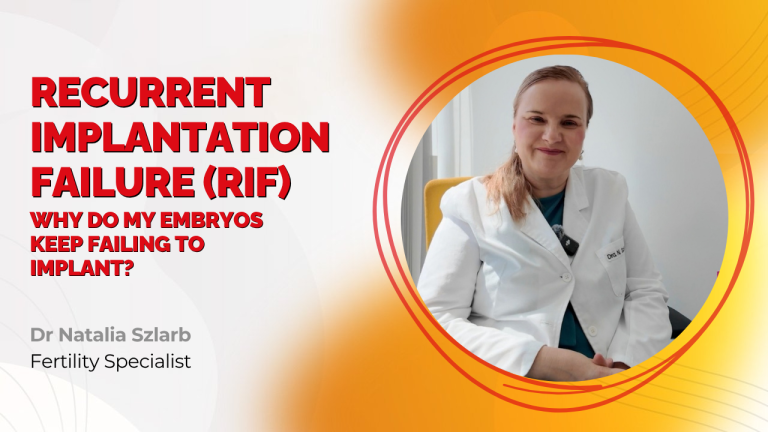


If you’ve experienced repeated implantation failure or wonder why a good embryo sometimes doesn’t implant after IVF, this webinar is for you. Dr Elias Tsakos, FRCOG, Medical Director at Embryoclinic IVF Unit, reviews what implantation failure really means today, shares the latest research and clinical approaches for 2026, and explains practical testing and treatment options.
Drawing on real clinical experience, this session goes beyond definitions to explain why implantation failure is often multifactorial—involving embryo quality, uterine environment, and systemic factors—and why a personalised, evidence-based approach is essential.
This webinar also highlights the importance of looking at the “seed, soil, and environment”—the embryo, the endometrium, and the overall biological context—to improve outcomes and avoid repeated unsuccessful transfers.
Repeated IVF failure is no longer defined mainly by how many transfers you have had; in a webinar presented by Dr Elias Tsakos, FRCOG, Medical Director, Embryoclinic IVF Unit, the more useful modern definition was failure of a euploid embryo — a DNA-normal embryo — to implant.
For years, recurrent implantation failure was often described as three embryo transfers that did not work, or the transfer of four good-quality embryos without a pregnancy. That older approach is becoming less helpful, especially for patients over the age of 35, when repeated failure may simply reflect aneuploidy — embryos with abnormal chromosome numbers — rather than a true implantation problem.
The newer way to think about it is more precise. If a very good embryo, especially a euploid embryo, does not implant, that points more directly to implantation failure. After a couple of euploid blastocysts fail to implant, this is probably implantation failure, even though there is still no strict universal agreement on whether the threshold should be two or three embryos.
That shift matters because it changes what should be investigated next. If the embryo itself may be abnormal, the first priority is embryo testing and embryo selection. If DNA-normal embryos have already failed, attention should move to the uterus, the endometrium, the transfer process, and broader health factors that may be interfering with implantation.
There is also a distinction between primary and secondary implantation failure. Primary means no pregnancy has been achieved before. Secondary means there has been a pregnancy in the past. The causes can overlap with recurrent miscarriage, but the clinical situation is different: recurrent miscarriage is usually discussed in the setting of spontaneous conception, while implantation failure is usually discussed in the setting of IVF.
Implantation depends on a successful dialogue between the embryo and the endometrium. But that conversation cannot go well if the embryo is not competent to begin with. Embryo quality remains one of the most decisive factors in whether implantation happens.
That is why PGT-A remains central in selected situations. The notes from this webinar were clear that the main body of evidence still favours PGT-A under specific circumstances, particularly in women over the age of 35 and in patients who have had failed implantations with untested embryos. If there is doubt about whether the embryo’s DNA abnormality is the reason for failure, the embryo should be investigated first.
This is also why older definitions based only on transfer counts can mislead patients. A person may go through several failed transfers and assume the uterus is the problem, when the main issue may have been the embryo’s chromosomal status all along. Once PGT-A has confirmed DNA-normal embryos, the investigation can become much more targeted.
That does not mean every patient needs the same plan. The broader message was precision medicine: quality over quantity, and individualised decisions rather than blanket rules. In women over the age of 35, even five good-quality embryos may yield a maximum of two or three that are truly usable in this sense. The goal is not simply to produce more embryos, but to identify the embryos with the best chance of implanting.
Even the most sophisticated lab tools have limits. Time-lapse systems and AI embryo selection may help choose among embryos, but they do not replace DNA testing. At present, DNA testing remains the only way to be sure about embryo chromosomal normality.
One of the most practical points from the webinar is that a failed transfer of a good embryo should trigger a review of the entire embryo transfer process. That applies even after 1 failed embryo transfer.
The technical side of transfer can affect implantation. That includes:
This is easy to overlook because patients often focus on embryo grading or test results. But there is little value in advanced embryo selection if the transfer itself is not done under optimal conditions. For patients with suspected implantation failure, the webinar emphasized using the most senior staff possible for both embryo handling and embryo transfer.
Hormonal timing matters too. Implantation depends not only on embryo quality and uterine health, but also on whether the embryo arrives during the right receptivity window. The exact number of completed days of progesterone, along with the dose and route of administration, may affect implantation. Progesterone may be given orally, vaginally, subcutaneously, intramuscularly, or in combination, and compliance matters.
Blood progesterone testing was described as imperfect because levels can vary widely and can be strongly influenced by dose and drug type. There is now a trend toward measuring urine progesterone instead. The larger point is that timing and hormone support should be checked carefully rather than assumed to be correct.
Once embryo quality has been secured, the uterine environment becomes the main focus. That starts with a broader view of the uterus than many patients are used to hearing about.
A thin or thick lining alone does not tell the whole story. Endometrial thickness is only one parameter. A normal functional endometrium also depends on factors such as regularity, density, vascularity, and whether the tissue is in phase with the cycle. A thick lining can still be abnormal if it is too dense, too luteinized, or out of phase.
The webinar placed particular emphasis on high-quality imaging, especially a 3D ultrasound scan in expert hands. This was described as very important and underused in many IVF units. A top-level 3D scan can assess not only the endometrium, but also the myometrium, adnexa, and signs of pelvic endometriosis. It may reveal hidden pathology that affects IVF success, implantation, and miscarriage risk.
That matters because missed uterine abnormalities can lead to repeated failed transfers. Pathology inside or around the uterine cavity may include:
One striking example from the webinar involved a patient with a complete uterine diaphragm extending into the vagina and dividing the vagina into two parts. Her repeated failed embryo transfers occurred before the diagnosis was made. The lesson is not that this is common, but that important structural problems can be missed if imaging and cavity assessment are not thorough.
For that reason, hysteroscopy remains a key tool when implantation failure is suspected, especially after failure of a euploid embryo. It allows direct inspection of the cavity and can be combined with biopsy for standard histology, endometritis, and sometimes microbiome assessment.
Implantation is not only about the embryo and the uterine cavity. The surrounding pelvic environment matters too. The webinar repeatedly returned to the idea that the uterus, peritoneum, and systemic health all contribute to whether implantation succeeds.
This is especially relevant for patients with suspected or known endometriosis. A high-resolution 3D scan can help evaluate pelvic disease, and MRI may also be used because the two approaches are complementary. In complex cases, treatment may need to happen in stages: first secure embryos, then address the endometrium and surrounding pelvic pathology before transfer.
The same logic applies to other conditions that can interfere with implantation. Hydrosalpinx, for example, should be excluded because tubal fluid may affect the uterine environment. Hormonal factors also matter in both a fresh cycle and a frozen embryo transfer, and the choice between fresh and frozen transfer should depend on the clinical situation rather than a universal rule.
Fresh transfer may be preferred when conditions are ideal, but it does not leave time for proper PGT testing. In patients with implantation failure or significant pelvic disease, a frozen transfer often allows more time to investigate and optimise the uterine environment first.
A major theme of the webinar was avoiding over-testing. Not every available test is useful, and evidence should guide the workup.
The ERA test and ALICE test, both designed to address receptivity and implantation issues, were described as not helpful. In the Q&A, these tests were said to have been phased out, with strong evidence suggesting they do not improve care in this setting.
NK testing was treated with similar caution. There may be some theory behind it, but the evidence was described as not solid and not proven. It is not used routinely and would not be a first, second, or third priority in the investigation of implantation failure.
By contrast, several simpler and more established steps were emphasised. Depending on the case, these may include:
This is a more grounded approach than chasing every possible explanation. Many causes of implantation failure can be addressed with relatively straightforward measures once the investigation is focused.
When embryo quality, anatomy, infection, inflammation, and transfer technique have all been addressed, some patients still need additional support. This is where individualised treatment becomes important.
Platelet-rich plasma, or PRP, has been used for more than a decade, but the evidence remains limited. Still, two meta-analyses suggest it may have a role in selected cases. The webinar suggested PRP may be worth considering when everything else has been excluded, corrected, and optimized, particularly after uterine surgery that has caused adhesions or in cases of thin endometrium that does not grow despite treatment.
Other options mentioned included growth factors and sildenafil, again used selectively rather than routinely. None of these was presented as a universal solution. The message was the opposite: implantation failure is rarely solved by a one-size-fits-all add-on.
Even in a highly technical field like IVF, the webinar made room for basics that can easily be neglected. Lifestyle and stress were described as important around the time of implantation, and preconception care was framed as important not only for treatment success but for embryo development more broadly.
Patients were encouraged to be relaxed, well fed, and hydrated, and to keep the body in the best possible condition before transfer. Nutrition matters. So does avoiding alcohol, smoking, and illegal drugs. One practical example from the webinar underscored how easy it is to underestimate alcohol intake: 5 or 6 glasses of wine per week may actually amount to 12 to 16 units, depending on the size of the glass.
The webinar also supported a broader, evidence-based, holistic approach. Dr Elias Tsakos said he is a strong supporter of acupuncture and believes there is evidence linking it to improved fertility outcomes. The proposed mechanism was straightforward: stress reduction may lower cortisol, support better metabolic health, and improve overall function.
That may matter even beyond any direct biological effect on implantation. IVF is physically and emotionally demanding, and many patients stop treatment before they reach a successful cycle. As he put it, if patients give up, they have zero chance. A better treatment experience can help people continue.
When implantation has failed, the next step should not be automatic repetition. The more useful approach is to pause and ask where the weak point may be.
A practical framework from this webinar is to review three areas in order:
For many patients, that means confirming whether the embryos are euploid before doing extensive uterine testing. If euploid embryos have already failed, it means reassessing the transfer process, checking progesterone timing and support, performing expert imaging, and considering hysteroscopy with biopsy. It also means looking beyond lining thickness to the full uterine and pelvic environment.
Systemic factors should not be ignored. Hormonal imbalance, inflammatory or immunological disease, metabolic issues, and lifestyle can all shape the conditions in which implantation happens. But the workup should stay disciplined. The goal is not to do every test available. It is to identify the factors most likely to change the outcome of the next transfer.
Implantation failure is one of the most frustrating experiences in fertility treatment because it can feel invisible: the embryo looked good, the transfer happened, and still nothing followed. The most useful update from this webinar is that the field is moving toward a clearer definition and a more rational response. When a euploid embryo fails to implant, that is a signal to investigate carefully, not blindly.
There is no single explanation for recurrent implantation failure, and there is no universal fix. But there is a structured way forward: secure the best embryo possible, optimize the uterine environment, refine the transfer process, and address the broader health factors that shape implantation. For patients facing another transfer, that kind of individualized plan offers something more valuable than a quick add-on or a generic protocol: a better chance that the next attempt is truly different from the last.
Failure of euploid embryos to implant fits the modern definition of implantation failure. If there is any doubt about the embryo’s DNA status, insist on PGT-A before any further transfer. Once DNA-normal embryos are confirmed, attention should shift to other causes.
An 8 cm cyst is most likely an endometrioma, but it cannot be definitively confirmed without biopsy because a hemorrhagic follicular cyst or a cystadenoma that has bled may look similar on scan. An 8 cm cyst should be removed for health reasons as well as fertility reasons, because of risks including rupture, twisting, strangulation, and the fact that it is not 100% certain to be benign.
Before surgery, do a full workup for additional endometriosis using high-resolution imaging. A 3D scan in expert hands may be better than an MRI scan in less expert hands, although both are usually suggested because they are complementary.
ALICE and ERA testing have been phased out, and strong evidence suggests they are not helpful. A practical next step is to continue creating embryos and testing them, freeze two or three top-quality euploid blastocysts, then optimise the uterine environment. In this situation, frozen embryo transfer is favoured rather than fresh transfer, possibly in a natural cycle, after reducing inflammation, controlling any endometriosis or adenomyosis medically, performing hysteroscopy, 3D ultrasound, microbiome testing, and endometritis testing, and paying close attention to the technical details of embryo transfer.
Yes. Do everything possible before transferring the remaining euploid embryo because its value is very high, especially in the late thirties or at age 40.
A high-resolution 3D scan is recommended to ensure the myometrium and pelvis are normal, and definitely an office hysteroscopy. During hysteroscopy, inspect the cavity, take a small biopsy, and test at least for standard histology, endometritis, and possibly the microbiome. Scratching is no longer strongly favored, but it does not harm.
If cycles are normal and predictable, natural-cycle frozen embryo transfer is preferred. A little hCG trigger can support the corpus luteum and natural progesterone production, with a little extra progesterone and perhaps a little estrogen as supplementation. A little more progesterone does not harm, whereas too little progesterone may be detrimental, especially in early pregnancy. It is also worth asking the clinic to ensure that the most experienced staff handle the embryo and perform the transfer, followed by appropriate pregnancy support, mainly with estrogen and progesterone.
When discussing supplementation during transfer cycles, the key medications are estrogen and progesterone rather than general supplements. Vitamins and lifestyle supplements are a very large topic and should be individualised.
Some essential supplements are commonly lacking, especially vitamin D in Northern Europe, so vitamin D levels should be checked. Folic acid should definitely be supplemented, but folic acid is not actively metabolised efficiently in as many as 40% of patients. If supplementing blindly, choose the active form, folate. If taking a more scientific approach, check for mutations and homocysteine in order to individualise treatment.
With four euploid embryos, the chance of taking home one baby is more than 90%, around 95%, and the chance of taking home two babies is also very high.
PCOS should be fully investigated for metabolic and inflammatory effects, including glucose tolerance and the full metabolic workup, even with a BMI of 19. PCOS should be diagnosed and optimised before transfer.
Lupus anticoagulant is not a huge factor but should be optimised and discussed with a specialist, including whether management should involve aspirin, low molecular weight heparin, or both. If the fertility doctor is not sufficiently confident in this area, consult a haematologist experienced in fertility and pregnancy, especially with a view to preventing complications such as antiphospholipid syndrome.
Definitely do hysteroscopy and check the endometrium for endometritis with simple tests, including CD138, standard biopsy, and microbiome testing. NK cells would not be tested initially. For clinically diagnosed endometriosis, start with a high-resolution scan and possibly an MRI scan, but do not go beyond that before embryo transfer. There is also a noninvasive belt-based technique available in Wales with very impressive data that may be worth considering. Laparoscopy would not be recommended before the first transfer in this situation and should be reserved for later if embryo transfer fails.
Take it step by step. If embryos have not yet been created, optimise the male partner’s health first. This includes semen analysis, DNA fragmentation index testing, with or without oxidative stress testing, and general blood tests, including hormonal levels, vitamin D, glucose, and metabolic syndrome assessment. If the partner is obese, this should be addressed, because male obesity affects implantation and increases miscarriage rates.
With donor eggs, have a frank discussion with the clinic because there is a significant difference between fresh and frozen eggs, especially when eggs travel long distances. Discuss the origin of the eggs, travel conditions, interruptions, number of eggs, and egg quality.
Egg donation is not a solution to all problems, because even a perfect egg, a perfect lab, and a perfect clinician and embryologist do not guarantee a perfect embryo, especially when a significant male factor exists. Once embryos are created, focus on the endometrium and determine clearly whether endometriosis is present, because this matters not only for IVF success but also for pregnancy outcome, pregnancy course, and overall health. Multidisciplinary fertility care is important, including surgical, ultrasound, immunology, haematology, and infectious disease expertise.
Lining thickness is only one parameter and should not be used alone to judge endometrial quality. Assessment should also include regularity, density, vascularity, the uterine wall, and the surrounding pelvic environment. A thick endometrium can still be abnormal if it is too dense, too luteinized, or out of phase.
The uterine factor is not just the endometrium, and the endometrium is not just thickness. Before embryo transfer, everything should be optimal, and if there is any doubt, hysteroscopy with biopsies should be performed to ensure normality. It is also important to exclude hydrosalpinx, which is a damaged tube containing fluid. Hydrosalpinx may or may not be visible on scan, depending on whether the fluid is draining into the uterus or abdomen. The uterine environment needs a comprehensive evaluation rather than a thickness measurement alone.
Start by asking what kind of embryos were transferred and whether they were tested. Focus first on the embryo, because the embryo is the seed.
Before egg collection, optimize the woman medically. Then ensure effective stimulation, egg collection, sperm preparation, and use any laboratory technology that may help sperm quality. Sperm-sorting techniques can be especially useful when sperm is associated with high DNA fragmentation, older age, or poor semen parameters.
Create top-quality embryos and culture them to the blastocyst stage, which is very important. Day-2 and day-3 transfers may be acceptable for a first transfer in a young person, but not when recurrent implantation failure is becoming a concern. Then use PGT-A to ensure the embryo is at least DNA-normal. Once that is secured, shift attention to the endometrium, implantation, and the surrounding environment.
NK testing is not a first recommendation and is not used routinely. There is some theory behind it, but the evidence is not solid and it is not proven. It is not a first, second, or third priority. Both blood and uterine NK testing may play a small role, and even the placebo effect may be important. For initial investigation, endometritis testing, CD138, standard biopsy, and microbiome testing are more than enough.
Lifestyle and stress are definitely important. Around implantation, aim to be relaxed, well-fed, and hydrated, and keep the body in the best possible condition. Preconception care is very important, because the most important time for embryo development, not only in utero but also in later life, is before conception.
Acupuncture is strongly supported, and there is evidence for the improvement of fertility outcomes. One simple mechanism is stress reduction, and stress reduction is associated with cortisol reduction, better metabolic health, and better function. A better treatment experience can also give patients the strength to continue, which matters because many people give up, and if they give up, they have zero chance. A real holistic approach should be evidence-based and include lifestyle, nutrition, and avoidance of alcohol, smoking, and illegal drugs.


+ 1 more answers

+ 2 more answers

+ 6 more answers
+ 1 more answers
Necessary cookies are absolutely essential for the website to function properly. This category only includes cookies that ensures basic functionalities and security features of the website. These cookies do not store any personal information.
Analytical cookies are used to understand how visitors interact with the website. These cookies help provide information on metrics the number of visitors, bounce rate, traffic source, etc.
| Cookie | Duration | Description |
|---|---|---|
| _ga | 2 years | This cookie is installed by Google Analytics. The cookie is used to calculate visitor, session, campaign data and keep track of site usage for the site's analytics report. The cookies store information anonymously and assign a randomly generated number to identify unique visitors. |
| _gat_UA-38575237-21 | 1 minute | No description |
| _gid | 1 day | This cookie is installed by Google Analytics. The cookie is used to store information of how visitors use a website and helps in creating an analytics report of how the website is doing. The data collected including the number visitors, the source where they have come from, and the pages visted in an anonymous form. |
Any cookies that may not be particularly necessary for the website to function and is used specifically to collect user personal data via analytics, ads, other embedded contents are termed as non-necessary cookies. It is mandatory to procure user consent prior to running these cookies on your website.
Other uncategorized cookies are those that are being analyzed and have not been classified into a category as yet.
| Cookie | Duration | Description |
|---|---|---|
| _gat_FSQM52 | 1 minute | No description |
| cf_ob_info | No description | |
| cf_use_ob | No description |
