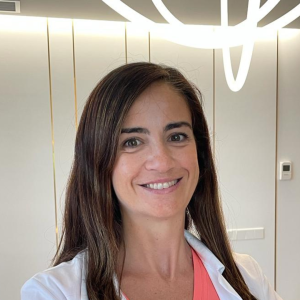
When IVF fails, the next step is not always another identical cycle: Dr Abraham Zavala, Scientific Director at Clínica Tambre, outlines how embryo genetics, the uterine environment, sperm factors and personalised testing can help explain what happened and guide treatment.
A failed IVF cycle can feel like a verdict on future attempts. It is not. IVF may fail for several reasons, particularly during a first attempt, and results can vary even when the same patient receives similar medication at roughly the same time. Managing expectations from the first consultation—and recognising the emotional toll of treatment—should be part of fertility care.
The most useful question after a failed cycle is not simply, “Why didn’t I get pregnant?” It is, “Which part of the process needs closer evaluation before trying again?”
The causes of IVF failure generally fall into two categories: problems with the embryo, including its genetic material, and problems with the endometrial environment, the uterine lining and cavity where implantation must occur.
Embryo-related factors account for 70% to 75% of the reasons a general cycle may fail. Embryo genetics become especially important when ovarian reserve is diminished or when IVF uses a woman’s own eggs after the age of 38. An embryo may look good under the microscope but still carry an abnormal number of chromosomes that prevents implantation or leads to miscarriage.
The uterus can also affect the outcome. Anatomical or structural problems, inflammation, clotting disorders and some immune-related factors may interfere with implantation. These causes can overlap, which is why repeating treatment without reviewing the circumstances of the failed cycle may miss an opportunity to change the odds.
A single unsuccessful transfer does not automatically indicate a persistent problem. Recurrent implantation failure is often considered after two euploid embryos—or two very good-quality blastocysts—have been transferred without pregnancy. Recurrent pregnancy loss is often diagnosed after more than two or three miscarriages. A miscarriage is a pregnancy loss before week 20; more than 95% of pregnancy losses occur during the first trimester, the first 12 weeks.
In both recurrent implantation failure and recurrent pregnancy loss, the embryo’s genetic content is often the leading cause. That does not mean every patient needs every available test. It does mean that the pattern of failure, the patient’s history and the available embryos should shape the investigation.
A spermiogram, or sperm analysis, examines concentration, progressive motility and morphology. Progressive motility refers to sperm cells that move forward. The analysis is performed under a microscope by a nephrologist or an embryologist.
For some patients, further sperm testing may be appropriate. DNA fragmentation testing examines the condition of the genetic material inside individual sperm cells, including single-strand and double-strand fragmentation. High fragmentation may affect sperm quality and fertility outcomes.
Additional techniques can be used to select sperm with lower fragmentation. The Zymot chip is one such sperm-selection method, while the sperm slow has the same broad objective. These approaches do not replace a standard sperm analysis; they provide additional ways to assess or select sperm when fragmentation is a concern.
Other genetic tests examine chromosomes rather than fragmentation. A FISH test evaluates whether sperm cells have the correct number of the chromosomes being studied, usually five important chromosomes. A karyotype analyses the number of chromosomes in a person’s cells. Each sperm cell and egg cell should have 23 chromosomes, while body cells have 46 chromosomes.
Egg quality is more difficult to measure directly. There is no specific test for it, so age is often used as a proxy, while ovarian reserve testing estimates both the expected number of eggs and, indirectly, the likelihood that those eggs may produce healthy embryos.
A woman’s ovarian reserve refers to the number of eggs available in the ovaries. It can be estimated through an ultrasound follicle count and an AMH test. AMH is a biomarker that helps predict how many eggs may be obtained during an IVF cycle, but it does not provide a direct measurement of egg quality.
Age-based assumptions are not always accurate for an individual patient. A 28-year-old may usually have more follicles or eggs than a 42-year-old, but AMH testing can identify exceptions. The results should therefore be interpreted alongside age, previous response to stimulation and the number and quality of embryos already created.
Egg quality is partly determined by genetic factors that cannot be modified. Women are born with a set number of eggs, whereas sperm cells can be generated about every three months. IVF medication does not create new eggs; it stimulates several follicles to mature instead of allowing only one egg to mature and ovulate.
Some factors related to oxidative stress may be modifiable. Supplements such as coenzyme Q10 and melatonin may improve ovarian quality to a certain degree, although the underlying genetic aspects of egg quality are not always improvable.
Treatment adjustments can also affect the number or quality of eggs obtained. Depending on the patient’s situation, a fertility team may consider changes to the stimulation protocol, dual triggering, multiple medications for final follicle maturation, dual stim or back-to-back stimulation cycles.
A poor response in one cycle does not necessarily predict the next cycle. Even when medication and timing are similar, cycle-to-cycle variation can be about 30%. The number of follicles recruited during stimulation may change, so a single unexpected result should be interpreted in context.
The same principle applies after ovarian PRP. PRP does not have an immediate effect; any response may take one, two or perhaps three cycles. Its effect is assessed through follicle counts and ovarian reserve markers, including FSH, LH, estrogen levels and AMH. The effect is not permanent and may last anywhere from one to perhaps six months, depending on the patient, the preparation and how it is administered.
Back-to-back stimulation cycles may shorten the time needed to collect eggs, but they do not necessarily produce more eggs than two separate cycles. They may offer a similar result in a shorter period. They are also not usually performed with PRP, and dual stimulation should take place only after enough time has passed for PRP to have an effect.
Preimplantation genetic testing comes in several forms, each designed to answer a different question.
PGT-A may improve the chance of pregnancy because an abnormal chromosome number is a leading cause of implantation failure or miscarriage. It is a diagnostic test, not a treatment, and it cannot change the embryo itself. It can also help estimate the likelihood of obtaining a chromosomally normal embryo based on age.
Embryo selection is not based only on genetic testing. A time-lapse incubator allows embryologists to observe embryo development without removing embryos from the incubator, keeping culture conditions uninterrupted. This may potentially support embryo development and provide additional information about how embryos progress.
Artificial intelligence is also entering this part of care. The tool CHLOE analyses embryo-development data from the time-lapse incubator. AI algorithms may help identify which embryos appear to have the best chance of achieving pregnancy.
A similar AI program can analyse the endometrial lining to help determine the best time for embryo transfer. These tools add information to the decision-making process; they do not eliminate the need for clinical judgment or individualised assessment.
A regular ultrasound may not reveal every cavity abnormality. Fibroids, polyps and other lesions may require a more detailed assessment with hysteroscopy or 3D ultrasound.
The physiology of the lining can also be assessed through microbiome analysis. This looks for beneficial bacteria as well as bacteria that may contribute to chronic inflammatory processes. Chronic endometritis is not the same as endometriosis: endometritis involves a pathogen that may cause no symptoms but creates a pro-inflammatory environment in the endometrial lining.
Clotting and immune-related factors may be considered in selected patients. Thrombophilias can increase the risk of blood clots, and some patients may benefit from low molecular weight heparin or low-dose aspirin. Immunology testing may include thyroid function, vitamin levels, celiac disease assessment and HLA markers.
A uterine scar deserves particular attention when its location or structure could interfere with implantation. A scar may result from a cesarean section performed in the fundus or from fibroid removal. The surgeon who performed the operation needs to clarify how many layers of uterine muscle were opened or removed, because this affects the recommended interval before pregnancy and the risks associated with a future pregnancy.
A scar can interfere with implantation if it produces fluid that enters the uterine cavity. It may also increase the risk of invasive placentation, miscarriage or uterine rupture. Ultrasound and, when appropriate, hysteroscopy can help clarify the scar’s anatomy and guide management.
Transferring more embryos does not guarantee twins—or even a pregnancy. A twin pregnancy can occur after one embryo is transferred, while a single pregnancy can occur after two embryos are transferred.
The chance of pregnancy per transfer is slightly higher with a double embryo transfer. However, two single embryo transfers provide two opportunities to attempt pregnancy, and the overall chance may therefore be much higher across those two attempts.
The objective is not simply to maximize the number of embryos transferred. Twin pregnancy is considered high risk, even when it occurs naturally. IVF treatment aims to achieve pregnancy with the lowest possible risk.
Some patients may be advised to consider donor sperm because of very poor semen quality, a lack of sperm production, a genetic disease that cannot be effectively studied or treated, or the absence of a male partner. Potential donors undergo testing to confirm that they are fit for donation.
Donor eggs may be considered when ovarian reserve is diminished, maternal age is advanced, ovarian quality is poor or stimulation response is inadequate. Other situations include diseases or conditions that cannot be analysed or treated effectively, recurrent pregnancy loss or recurrent implantation failure.
Female donor candidates undergo extensive medical screening, psychological assessment and physical examination. Carrier screening can help match a donor and patient in a way that reduces the genetic risk of transmitting certain conditions. An AI tool is also used to compare the donor’s physical resemblance with that of the patient or recipient.
A different decision may arise when a patient has already transferred euploid embryos without success. After two failed euploid transfers, further evaluation may be reasonable, including review by an immunologist and consideration of whether additional testing could clarify the situation.
If another stimulation cycle is possible, obtaining another euploid embryo may be considered before transferring a mosaic embryo. A mosaic embryo transfer requires genetic counselling so the patient understands the implications. After counselling, it may be considered a safe option in selected circumstances, but the decision should be made with a geneticist and the fertility team.
The most useful post-failure plan is personalised rather than automatic. Depending on the history, the evaluation may include:
Not every patient needs every test. Diagnosis helps distinguish real treatment options from tests or interventions unlikely to change care.
Fertility treatment is also a team effort. A multidisciplinary team may include gynaecologists, specialised embryologists, andrologists, urologists, immunologists, nurses and patient-support staff. Access to current techniques and technologies can expand the options, but the value of any test or treatment depends on whether it addresses the patient’s particular situation.
A failed IVF cycle is painful, but it can also provide information about where the process may have broken down. The explanation may lie in embryo genetics, sperm or egg factors, the uterine cavity, the endometrial lining or a combination of several factors.
The next attempt should not be defined by the previous protocol alone. A careful review, realistic expectations and a personalised plan can help patients decide whether to adjust stimulation, investigate the uterus or sperm, consider genetic testing, use donor material or seek further counselling before transferring an embryo.
Cycle-to-cycle results can vary even when the same patient uses the same medication at roughly the same time. This variation can be up to about 30%. It is important to distinguish normal variation from variation caused by an external factor. The number of follicles recruited during stimulation can change from cycle to cycle.
PRP does not have an immediate effect. It may take one, two, or maybe three cycles for the ovary to start to respond. Its effect is assessed by counting follicles and by looking at ovarian reserve parameters, including FSH, LH, estrogen levels, and anti-Müllerian hormone. Ovarian stimulation is usually started when these parameters show that PRP has had an impact.
PRP also does not last indefinitely. Its effect can last anywhere from one to maybe six months, depending on the patient, the PRP preparation, and the way it is instilled.
With adenomyosis, separate the treatment into two different goals: obtaining an embryo for transfer and then focusing on the uterine cavity. Treatment for adenomyosis can be different from ovarian stimulation.
For example, adenomyosis is often downregulated by reducing hormonal stimulation to reduce disease activity, while ovarian stimulation uses hormones to obtain the greatest number of eggs possible. These are two separate therapies.
Back-to-back cycles can be performed with ovarian stimulation, but they are not usually performed with PRP. The advantage of dual stimulation or two back-to-back cycles is not more eggs than two separate cycles. The advantage is achieving a similar result in a shorter amount of time.
Dual stimulation should also be performed only after the time for PRP to have an effect has already passed.
The failure of euploid embryo transfers opens the door to additional testing to gain a better understanding of the situation. When considering transfer of a mosaic embryo, genetic counselling with a geneticist is important so the implications are understood. The clinic’s protocol is to provide genetic counselling before mosaic embryo transfer.
If another stimulation cycle is possible, it is reasonable to try to obtain another euploid embryo before transferring the mosaic embryo. After counselling, transferring a mosaic embryo is usually considered a safe embryo transfer. However, geneticists often explain that mosaic embryos may become healthy genetic embryos with poor quality for implantation.
The embryo should be chosen only after adequate counselling. The immunology protocol can also sometimes be modified after one or two failed transfers. Another consultation with the immunologist would therefore be a good idea to review whether changes should be made to the treatment protocol or to the tests already performed.
It depends on what caused the uterine scar. It could be related to a cesarean section made in the fundus for obstetric indications, or it could be secondary to fibroid removal.
The gynaecologist or surgeon who operated needs to determine this. The number of layers opened in the uterine muscle affects how long one should wait before trying to achieve pregnancy. The number of layers excised also affects the risk of invasive placentation, miscarriage, and uterine rupture, and these risks can increase.
Uterine rupture is one of the most feared consequences of a uterine scar. The scar can also affect implantation if it produces fluid that enters the cavity. This situation should be evaluated with ultrasound scans and possibly hysteroscopy to better understand the risks and the best way to manage the condition.



+ 2 more answers

+ 13 more answers

Necessary cookies are absolutely essential for the website to function properly. This category only includes cookies that ensures basic functionalities and security features of the website. These cookies do not store any personal information.
Analytical cookies are used to understand how visitors interact with the website. These cookies help provide information on metrics the number of visitors, bounce rate, traffic source, etc.
| Cookie | Duration | Description |
|---|---|---|
| _ga | 2 years | This cookie is installed by Google Analytics. The cookie is used to calculate visitor, session, campaign data and keep track of site usage for the site's analytics report. The cookies store information anonymously and assign a randomly generated number to identify unique visitors. |
| _gat_UA-38575237-21 | 1 minute | No description |
| _gid | 1 day | This cookie is installed by Google Analytics. The cookie is used to store information of how visitors use a website and helps in creating an analytics report of how the website is doing. The data collected including the number visitors, the source where they have come from, and the pages visted in an anonymous form. |
Any cookies that may not be particularly necessary for the website to function and is used specifically to collect user personal data via analytics, ads, other embedded contents are termed as non-necessary cookies. It is mandatory to procure user consent prior to running these cookies on your website.
Other uncategorized cookies are those that are being analyzed and have not been classified into a category as yet.
| Cookie | Duration | Description |
|---|---|---|
| _gat_FSQM52 | 1 minute | No description |
| cf_ob_info | No description | |
| cf_use_ob | No description |