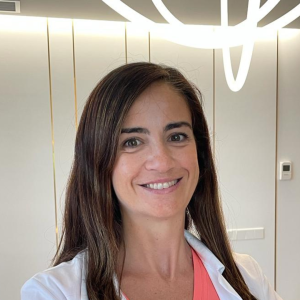
A failed IVF cycle calls for a review of where treatment fell short—not an automatic repeat of the same approach or a search for someone to blame—according to Dr Elias Tsakos, FRCOG, Medical Director of Embryoclinic, Greece.
Hosted by: Jessica Bourke – Founder of The Fertility Detective, with 20+ years of experience supporting individuals through fertility challenges and pregnancy loss.
“IVF didn’t work” can describe very different experiences: fewer eggs than expected, poor fertilisation, embryos that stopped developing, or an unsuccessful transfer. Each points to a different part of treatment that needs attention. Comparing the expected and actual outcomes can help pinpoint where treatment fell short.
Age is one factor in this assessment, not an explanation for every disappointing result. Ovarian reserve, stimulation, monitoring, collection timing, laboratory methods and the experience of the team all matter. Finding a correctable problem can give the next attempt a clearer direction, although not every disappointing result has an identifiable cause.
A low egg yield needs to be considered alongside the response predicted before treatment. AMH and antral follicle count help assess ovarian reserve, while three-dimensional scanning with automated folliculometry can improve predictions of the stimulation outcome. When the prediction and the result do not match, the review should extend beyond the reserve tests.
That assessment includes the stimulation protocol, hormone-level changes and how closely the cycle was monitored. It also includes the timing of the trigger and egg collection: triggering too early or too late may affect the outcome. Collection timing should be checked against the appropriate interval—35 hours, 36 hours or 37 hours—and a weekend gap should not simply be accepted without examining whether timing was optimal.
More eggs are not necessarily a problem in themselves. However, PCOS, metabolic issues and excessively high doses of FSH need consideration rather than treating egg numbers as the only measure of a good response.
For patients who obtain very few eggs, DuoStim offers a way to pursue more eggs within the same overall cycle. The first collection takes place when most follicles have reached the target size. Stimulation may then restart a couple of days later, giving smaller follicles a chance to grow before a second collection.
At Embryoclinic, this approach is considered particularly for poor responders, women of advanced reproductive age and international patients seeking to maximise egg yield in one visit. Its usefulness depends on what the first collection produces, rather than on age or AMH alone. A small number of fertilised eggs may make a second stimulation valuable, whereas an already substantial number may leave little reason to proceed.
If eggs are collected but few embryos develop, the investigation shifts toward fertilisation, sperm quality and the laboratory. ICSI is used for the majority, if not all, of Embryoclinic’s patients and is not treated there as an extra-charge add-on. The clinic’s approach is to avoid spending a cycle discovering that conventional IVF was unsuccessful and ICSI was needed.
Laboratory technology also needs to be judged by what it can actually contribute. Time-lapse culture can reveal poor embryo development earlier and allow patients to receive updates sooner, but there is no evidence that it increases overall success. Sperm-selection devices may be useful in some circumstances, including suspicious sperm quality or untested DNA fragmentation, rather than being an automatic answer to low embryo numbers.
The broader review should cover laboratory protocols, technologies, add-ons and possible sperm factors together. Focusing on a single intervention risks leaving another weak point unexamined. The question is not simply whether more technology was used, but whether the methods addressed the problem that occurred.
Embryo quality is the main factor identified in implantation failure, with abnormal chromosomes the principal embryo-quality concern associated with adverse outcomes. That makes PGT-A, a form of embryo chromosome testing, a possible part of the next-step discussion. It is not automatically indicated, however, including between 35 and 38 years of age, when there remains a good chance of chromosomally normal embryos without testing.
Testing also involves a trade-off rather than a risk-free extra check. The embryo is manipulated, cells are retrieved, and it usually needs to be frozen, stored and later thawed. In Greece, PGT-A requires authorization, reflecting concern about using it without a clear indication.
An embryo-focused investigation should not overlook the uterus, particularly when transfer failure is unexpected. Congenital abnormalities, polyps, fibroids and adenomyosis may affect implantation; even a small fibroid that does not enter the uterine cavity can interfere. High-resolution and three-dimensional scanning can improve anatomical assessment, while endometritis and the uterine microbiome are also considered in evaluating the uterine environment.
Eggs, sperm and uterine anatomy are not the only areas that may need investigation. Metabolic problems and insulin resistance can affect egg quality, implantation and the chance of a normal pregnancy. At Embryoclinic, standard metabolic assessment includes fasting glucose and insulin, HbA1c, and a lipid test examining the triglycerides-to-HDL ratio.
Hormonal changes around perimenopause can add another layer of complexity to fertility treatment. Fairly normal periods do not necessarily rule out estrogen deficiency, which should be addressed before IVF. Thyroid testing and anti-thyroid antibodies may also warrant attention because hormonal changes during transfer preparation and early pregnancy can trigger thyroid imbalance.
For patients considering their own eggs at 45, the first question at Embryoclinic is whether treatment is feasible. Menstrual regularity, natural-cycle follicle growth and hormone patterns are reviewed. About half do not qualify because of anovulatory cycles, markedly abnormal hormones or persistent cysts.
For those who qualify, the clinic may use mild stimulation, ideally incorporating DuoStim, while working toward a euploid blastocyst—an embryo with a normal chromosome complement. The estimated chance of a euploid blastocyst at 45 is probably about 20% to 30%, and unusual successes should not be treated as typical expectations. The clinic usually sets six months as a stopping point, recognising how consequential that period is at this age.
The review should clarify the course of the failed cycle, identify possible changes and distinguish those findings from unanswered questions. Even apparently well-managed cycles can produce empty follicles, low fertilisation, or unexpectedly few blastocysts, and an honest admission of uncertainty is better than a forced explanation. Infertility is deeply painful, and patients deserve both a practical plan and care that treats them as partners rather than assigning blame.
Review the entire chain: age, ovarian reserve, stimulation, hormones, monitoring, trigger timing, retrieval timing, and embryology technique. Compare expected and actual outcomes, then identify and correct the weakest link where possible.
DuoStim aims to maximise egg retrieval within 1 cycle. After collecting follicles at the target size, stimulation may restart a couple of days later to collect smaller follicles. It is particularly considered for poor responders, older patients, and patients travelling for treatment.
Review fertilisation, sperm quality, laboratory protocols, technology, and add-ons. The clinic generally uses ICSI, not as an add-on. Sperm sorting may help with untested DNA fragmentation or suspicious sperm quality; time-lapse culture may identify poor development earlier.
Embryo quality comes first, with abnormal chromosomes being the main adverse factor. After 35, at best, 50% of tested embryos are normal, declining with age. Always assess uterine anatomy, polyps, fibroids, adenomyosis, the uterine environment, and microbiome.
Restrictions prevent its use without clear indications. Testing involves embryo manipulation, cell removal, and usually freezing, storage, and thawing. Donors are legally under 35; abnormal chromosomes are extremely unlikely, so testing is considered more likely to compromise than help donor-egg cycles.
Studies associate 15–20 eggs with higher pregnancy chances than 10 or fewer. Many eggs are generally positive without PCOS or excessive FSH. More than 350 units daily is a gigantic dose; 600 units does not fit these protocols. Assess PCOS/PMOS and insulin resistance.
Recommended checks include three-dimensional ultrasound, possibly a tubal test to exclude “high dose alphanges,” endometrial scratching/biopsy, endometritis and microbiome testing, hormones, thyroid tests, and anti-thyroid antibodies. The clinic treats antibodies with low-dose thyroxine even with normal TSH, because transfer preparation and early pregnancy can trigger thyroid imbalance. Proceed with transfer, requesting senior clinical or embryology involvement.
Use morning fasting glucose and insulin, HbA1c, and lipids. Target HbA1c below 5.6 and a triglycerides-to-HDL ratio below 2. These inexpensive tests inform fertility-associated risk, general health, longevity, and pregnancy outcomes.
Perimenopause can accompany fertility problems from the late 30s through the early 50s. Metabolic factors become increasingly important for conception, pregnancy, and health after delivery. Estrogen deficiency may exist despite fairly normal periods and should be addressed before IVF.
About half do not qualify because of anovulatory cycles, abnormal hormones, or persistent cysts. Eligible patients receive mild stimulation, potentially over 6 months. One exceptional 45-year-old produced 6 blastocysts in 1 cycle; no similar case had occurred for over 2 years.
Yes. Assess uterine anatomy and environment, metabolic status, thyroid issues, thrombophilias, and general health. Older patients are more likely to have undiagnosed uterine abnormalities requiring careful evaluation.
With eligibility, regular cycles, and normal monitoring, ideally use DuoStim to obtain 2, 3, or 4 blastocysts and 1 euploid embryo. Test after 1 or 2 embryos, or accumulate 3 to 5. Usually stop at 6 months: chances decline further at 45.5–46. A euploid blastocyst at 45 has the same implantation and healthy-child delivery chance as an untested blastocyst at 37–38.
Yes. PGT-A can be performed when the male partner or the woman has an abnormal karyotype.
Karyotyping concerns broader genetic abnormalities affecting the person, rather than sperm DNA defects alone. Strongly recommended for both partners, it is routine at the clinic and obligatory for donors. Costs have fallen dramatically; background anomaly risk in infertile couples is probably doubled. Undiagnosed abnormalities can have devastating effects.
Very important. Review stimulation, retrieval, timing, laboratory work, and blastulation. Step-down stimulation in antagonist cycles is considered probably harmful to follicles. Step-down and coasting were acceptable in long protocols to avoid OHSS.
Yes: high AMH alone does not ensure adequate mature eggs. DuoStim is not considered harmful to quality; repeated puncture, within limits, may improve outcomes, possibly through local inflammation. Collections of 3–4 eggs, followed by 4–5 eggs, have occurred. PRP literature suggests puncture itself may matter. Ages 40–43 are considered particularly favourable for DuoStim with PGT-A.
Sometimes the cause remains unknown. Empty follicles, low fertilisation, or unexpectedly few blastocysts can occur despite apparently optimal care. Not everything in biology can be explained; avoid forcing blame or misleading explanations.



+ 3 more answers

+ 2 more answers
Necessary cookies are absolutely essential for the website to function properly. This category only includes cookies that ensures basic functionalities and security features of the website. These cookies do not store any personal information.
Analytical cookies are used to understand how visitors interact with the website. These cookies help provide information on metrics the number of visitors, bounce rate, traffic source, etc.
| Cookie | Duration | Description |
|---|---|---|
| _ga | 2 years | This cookie is installed by Google Analytics. The cookie is used to calculate visitor, session, campaign data and keep track of site usage for the site's analytics report. The cookies store information anonymously and assign a randomly generated number to identify unique visitors. |
| _gat_UA-38575237-21 | 1 minute | No description |
| _gid | 1 day | This cookie is installed by Google Analytics. The cookie is used to store information of how visitors use a website and helps in creating an analytics report of how the website is doing. The data collected including the number visitors, the source where they have come from, and the pages visted in an anonymous form. |
Any cookies that may not be particularly necessary for the website to function and is used specifically to collect user personal data via analytics, ads, other embedded contents are termed as non-necessary cookies. It is mandatory to procure user consent prior to running these cookies on your website.
Other uncategorized cookies are those that are being analyzed and have not been classified into a category as yet.
| Cookie | Duration | Description |
|---|---|---|
| _gat_FSQM52 | 1 minute | No description |
| cf_ob_info | No description | |
| cf_use_ob | No description |