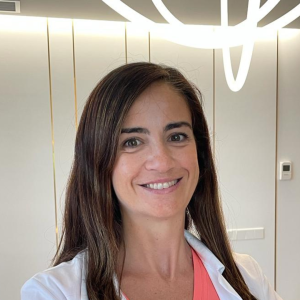


In this session, Dr. Yanina Samoilovich, Obstetrician-Gynecologist, Fertility Specialist at International Centre for Reproductive Medicine (ICRM), St. Petersburg, Russia has been talking about all the factors that can impact your IVF success like age, sperm and egg quality, uterine and genetics.
Dr Samoilovich started by naming the major influences on IVF success, these include the age of both partners, quality of gametes and embryos, embryo transfer, uterine factor, genetic factors, haematological factors, immunological factors and lifestyle including, BMI, smoking, and stress. Age is one of the most important factors. Each woman has a certain number of oocytes during fetal development, in the 4th month of fetal development, the ovaries have from 6 to 7 million oocytes. At any particular chronological age, the vast majority of the oocytes in the ovary are present as non-growing primordial follicles. Due to the rapid loss of the great majority of the primordial follicles, in the second half of fetal life at birth, only from 1 to 2 million primordial follicles remain. After birth, this high rate of follicle loss slows down somewhat, at least from 300 000 to 400 00 primordial follicles remain. During a woman’s reproductive years, their continued and gradually accelerated decline causes the number to drop below 1000 at the time of menopause. Along with the decrease in follicle number, oocyte quality also diminishes at least after 31, when fecundity gradually decreases.
It’s also important to remember the paternal age. Paternal age of more than 50 years old is associated with a high percentage of epigenetic changes, a higher percentage of DNA fragmentation and DNA mutation in the sperm and impaired spermatogenesis. It decreases the success rate of IVF programs, there is also a higher risk of some diseases in offspring like Autism, psychological disorders like Bipolar disorders and so on.
There are some protocols to improve the quality of eggs before stimulation. For patients with Polycystic ovary syndrome (PCOS), there are some drugs as Metformin or Myo-inositol, which have a positive impact on the egg quality in this group of patients. Another option is to give androgens to women with lower ovarian reserve to try to improve the receptivity and ovarian response. It’s very important to treat endometriosis before the stimulation, this is a disease with many steps of pathogenesis. Some drugs help with releasing the process of oxidative stress and alteration in the oocytes. Regarding sperm quality, some treatment options are available, such as treatment with antioxidants, and vitamins to decrease DNA fragmentation.
The quality of embryos is determined by the quality of gametes. The better embryo patients have, the more chances for a pregnancy they have. A special classification of embryos on day 5 includes cell number, percentage of fragmentation and nucleation as well as alterations and cell division moment.
The embryologist usually checks the embryos on day 3, they should have at least 8 cells, and then on day 5 at the blastocyst stage. A good quality embryo means it’s good or intermediate according to the classification, it has to have genetically healthy parents whose karyotype is checked with a blood test. If the embryo is PGT-A tested, there is a lot more information on its quality.
One of the key factors to having a good quality embryo is also a good IVF lab. Not only experienced embryologists but also the best equipment and the latest technology can result in a better quality embryo as well as higher pregnancy rates.
Nowadays, thanks to ultrasound and MRI, gynaecologists can easily find problems in terms of the uterus. There can be congenital abnormalities, which can cause an implantation failure, but also newly acquired anomalies such as polyps, myomas, adenomyosis, or adhesions in the cavity. Another difficult condition called chronic endometritis can be determined only by hysteroscopy and histological examination of the endometrium. Sometimes, as a result of chronic inflammation, thin endometrium can occur.
The optimal geometrical thickness is between 7 and 12 mm, and it should have a trilaminar morphology on ultrasound on the day of embryo transfer. The endometrial environment is very important and a high concentration of progesterone, for example, on the day of the trigger administration during an ovarian stimulation can cause an incorrect endometrial receptivity on the day of embryo transfer. Hydrosalpinx is a reason for chronic inflammation in the abdomen, and this inflammation process can reduce pregnancy rates by 50% and increase the risk of miscarriage by 50% as well. If a patient has mono or bilateral hydrosalpinx, it has to be removed by laparoscopy before an IVF cycle. Myomas can have a negative impact because they can alter the blood flow and increase the contractility of the uterus. Submucosal myomas can deform the cavity.
Some tests, such as the ERA test, help to predict the window of implantation. EMMA and ALICE tests can determine the endometrial microbiome and help to see if a patient has endometritis or not.
This final step is a very important step of the whole IVF procedure, and it can take a couple of seconds to a few minutes. The main factors that can affect embryo transfer are the doctor’s experience, ultrasound guidance, catheter type, gentle manipulation, the presence of blood, and rest after the transfer.
Thrombophilia can alter the coagulation cascade, and someone can develop microthrombosis, which can harm what will be the placenta of the baby. They can create blood clots and alter the blood flow between the baby and the mother, so sometimes, it can stop a heartbeat because of micro infections caused by those blood clots.
Thrombophilia can also cause, for example, heart attacks, thromboembolisms and so on. There is a low percentage of women who miscarry because of thrombophilia, and those can be treated with heparin and aspirin, which helps to prevent the formation of blood clots.
Women with recurrent pregnancy loss or thrombosis in their history should be checked for a difficult condition called antiphospholipid syndrome. NK cells should also be examined in such situations, NK cells are a type of lymphocyte circulating in peripheral blood. Immune cells that share similar phenotypic characteristics but are poor killers populate the uterine lining at implantation and during early pregnancy when the placenta is established. The functions of uterine NK cells are still unknown, but some available data shows that they play a role in regulating placentation and other elements of the decidua and invading trophoblast cells. Even though there is a lack of scientific proof, a lot of tests and treatment options are offered to women who undergo IVF or those experiencing recurrent miscarriages. However, it is important to remember that it still lacks evidence and should be carefully evaluated before such treatment can be offered.
Some factors depend on every patient personally. The first one is body mass index (BMI). The optimal BMI is from 20 to 24. Being underweight can cause a lack of ovulation, while obesity can increase the risks of complications during pregnancy, such as gestational diabetes, hypertension disorders preeclampsia and pre-term birth. Moreover, some data shows that being underweight or overweight can affect oocyte quality. Moderate physical activity and exercise decrease the risk of miscarriage and increase the chance of success among women who undergo IVF programs. A minimum of 1-hour exercise 3 times a week improves implantation rates and pregnancy and reduces the risk of miscarriage.
It’s necessary to understand some facts and the possible harm that caffeine can cause. It’s one of the most psychoactive components, and it is found in more than 60 plants, it exists in saliva, and breast milk. Caffeine is also present in tea, chocolate, and energy drinks, but it’s still unclear if caffeine impacts the chances of pregnancy. Therefore, experts advise limiting caffeine if you are trying to conceive and during pregnancy.
Another thing is alcohol, it’s clear that heavy drinking increases the time it takes to get pregnant and can affect a developing baby’s health. It’s best to avoid alcohol when trying to conceive, and those who try to conceive should limit alcohol to no more than 15 units a week.
Couples that deal with infertility, very often are very overstressed, which in the end decreases their chances of success, and that’s why it’s important to also have a consultation with a psychologist who can help with finding ways to deal with stress and their ongoing fertility treatment. In conclusion, one of the main principles of treating patients is to individualize the characteristics of each patient and adapt medical treatment to the individual characteristics of each patient.
The advanced maternal age is supposed to be a very difficult case for infertility treatment, and it’s important to know how many follicles you have on the ultrasound picture. It’s also important to know what is your medical history. It’s hard to say that 41 is the end of fertility, and every woman is different. For someone, it could be 41, for example, some days ago, I had a patient who is 43, and she delivered a baby by herself with no donor eggs, so no, I can’t say that 41 is considered to be the end.
It also depends on your previous medical history. If you had a lot of attempts with your own eggs and it all failed, maybe it’s useless to go ahead with your own eggs, and if you don’t have any good quality embryos with your own eggs as well. If it’s your first time and you haven’t tried with your own eggs before, you can try it if you are 40 to 42. I believe that the oldest age when you can try with your own eggs is 43-44, but again it depends on a particular case.
You must understand that supplements are vitamins and other different substances. There are not many of them that can increase the quality of sperm or eggs. Folic acid is a proven vitamin that both partners have to take, but different antioxidants like CoQ10 can also be helpful. There are a lot of various supplements that doctors can advise nowadays. I’m not sure it can do some harm to you. Unfortunately, the most important factor here is your age if we’re talking about women, so if you are at an advanced age, there are no supplements that can help, the age is the best prognosis factor. Regarding sperm quality, it’s important to remember that urologists can prescribe antioxidants that can increase sperm quality, but the lifestyle can do much more for man. Healthy diet and avoidance of cigarettes and alcohol, taking any supplements, etc.
The blood type is not as important as the Rhesus (Rh) factor, so if the donor has a negative Rh factor, the surrogate mother should have the same. The blood type doesn’t matter. Regarding epigenetics, it’s better to ask genetic specialists about it. Now, we are only at the beginning of understanding this epigenetics process. I’m afraid I can’t tell you a lot about it.
It’s supposed to be treated, but it depends on the kind of fibroid. If it’s submucosal fibroid, it definitely should be removed before an IVF cycle, before embryo transfer, and it doesn’t depend on its size, it should be removed. If we have intramuscular myoma, it depends on its size. Here in Russia, it’s legal not to remove it if it doesn’t deform the uterus cavity and if it’s not more than 4 or 5 centimeters. We should treat it, but it depends on the kind of fibroid.
Endometriosis is a chronic disease, unfortunately, and it’s important to know how many follicles you have now in your eggs and if it diminished or not. It’s also important to know what treatment of endometriosis you had after your operation. It’s better to have a complicated treatment, not only a standard operation but a complex treatment with drugs. Talking about your uterine lining, you can use high doses of estrogens, but we also know that it doesn’t always help and some other factors help, for example, in our center, we try to use platelet-rich plasma injections, and we use it twice in a frozen embryo transfer, and it is safe to use. This plasma can stimulate proliferation and regeneration by growth factors and cytokines that are inside this plasma, and we can’t say that it’s an approved method and it always helps, but it’s better than doing nothing. We have to do something when we want to improve the endometrial lining.
After the egg collection, you must feel well, and you can’t feel dizzy. It usually takes about 30 minutes to 1 hour, and then you can go home.
Except for the supplements you’re already taking, we can recommend vitamin D, 4 000 IU per day, but that’s all and continue with a healthy lifestyle. I’m not fond of prescribing a lot of supplements. I want to authorize things with proven data.
I’m not sure about honey, but there are a lot of different data about it. Concerning zinc, we can see that our urologists prescribe it for men, so zinc, selenium, and folic acid are very useful for sperm quality and quantity.
I think that every laboratory has its own reference. For us, vitamin D should be more than 30-40 units in blood, but I’m not sure if your laboratory has the same reference meaning, it depends.
If we’re talking about the natural cycle, we are not fond of prescribing a high dose, we should be prescribing a dose from 75 to 150 units of FSH when there is a low ovarian reserve. If we’re talking about lower values, not only about a natural cycle. If we’re talking about a natural cycle, we shouldn’t prescribe anything, that’s why it’s called the natural cycle. In the usual IVF, we should use the middle dose of FSH, which is from 150 to 225 units.
No, it’s better not to exercise after the embryo transfer, but you shouldn’t stay in bed either. You should go ahead with your regular life, and you should work, you can maybe swim or do yoga, but not heavy exercises when you had the embryo transfer. Before embryo transfer, you should do regular exercise, as it will improve your blood flow in your pelvic.
Definitely, yes. We often see that women who are overweight or who is obese needs more FSH dose. Sometimes, we can see that there is no growth of follicles, and we should use more and more, and we should increase the FSH dose, and even then, it can be useless even if we increase it. Those kinds of patients should lose their weight, and as I have already said, the optimal BMI should be from 20 to 24, and you can easily calculate it with different calculators online.
Unfortunately, I don’t think so. If you have more follicles in your right follicle, so let it be, and your AMH level is quite okay, it can easily be treated with IVF, and you can get a lot of oocytes from your one ovary. What matters is the whole amount of your oocytes, and I don’t think that you have to do something to encourage more activity of your left ovary.
Low AMH is considered to be less than 1.4 ng/ml here in Russia. Keep in mind that it depends on the laboratory too. It depends on the age of a patient and the level of FSH hormone. If the FSH hormone level is quite high, so more than 12 or 15, we have to use a high dose to make follicles in ovaries grow. If we use a low dose of FSH here, our ovaries won’t produce any follicles. I would try the middle dose of FSH in your case, about 200 units of FSH, maybe gonadotropin with LH activity, but again, I don’t know about your previous story attempts, etc., so I can advise that only looking at these numbers.
We tend to use LH for people of advanced age, so at the age of 35. We also use it when we had some failures using only FSH in previous attempts, and there are a lot of data that LH for women of advanced age can have some benefits when it comes to the egg quality.
It’s better to lose weight and then do IVF, but if you are 42, you don’t have enough time. Don’t waste a lot of time losing weight, just do IVF, as you are.
If we’re talking about donor eggs, the maximum age in our clinic is 54.



+ 2 more answers

+ 3 more answers

+ 13 more answers
Necessary cookies are absolutely essential for the website to function properly. This category only includes cookies that ensures basic functionalities and security features of the website. These cookies do not store any personal information.
Analytical cookies are used to understand how visitors interact with the website. These cookies help provide information on metrics the number of visitors, bounce rate, traffic source, etc.
| Cookie | Duration | Description |
|---|---|---|
| _ga | 2 years | This cookie is installed by Google Analytics. The cookie is used to calculate visitor, session, campaign data and keep track of site usage for the site's analytics report. The cookies store information anonymously and assign a randomly generated number to identify unique visitors. |
| _gat_UA-38575237-21 | 1 minute | No description |
| _gid | 1 day | This cookie is installed by Google Analytics. The cookie is used to store information of how visitors use a website and helps in creating an analytics report of how the website is doing. The data collected including the number visitors, the source where they have come from, and the pages visted in an anonymous form. |
Any cookies that may not be particularly necessary for the website to function and is used specifically to collect user personal data via analytics, ads, other embedded contents are termed as non-necessary cookies. It is mandatory to procure user consent prior to running these cookies on your website.
Other uncategorized cookies are those that are being analyzed and have not been classified into a category as yet.
| Cookie | Duration | Description |
|---|---|---|
| _gat_FSQM52 | 1 minute | No description |
| cf_ob_info | No description | |
| cf_use_ob | No description |