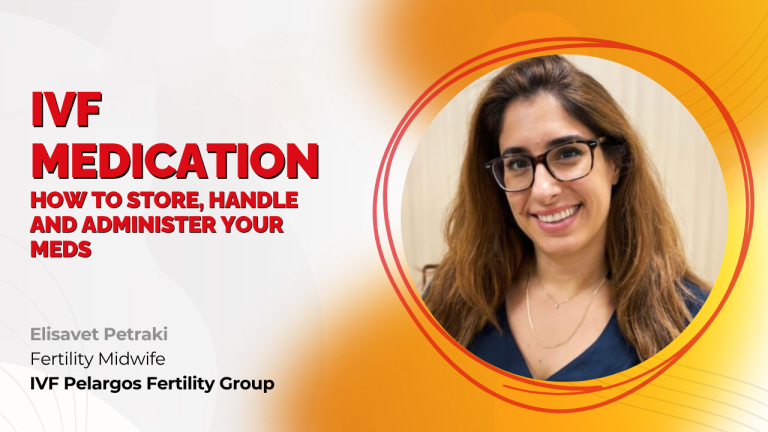


During this event, Louise Siwicki, Fertility Empowerment Coach and Fertility Workplace Advocate along with Dr Lynn Burmeister, Fertility Specialist and CEO & Medical Director at No. 1 Fertility covered strategies for fertility empowerment, discussed medical interventions and their role in fertility treatments and shared some practical tips for optimizing fertility health.
Statistics show that 1 in 6 couples will need some form of fertility treatment. By creating the right space and ambiance, we can alleviate stress, anxiety, and fear. These emotions often accompany a long fertility journey. You need to realize the importance of understanding your body and fertility and how it works early on, starting the earlier, the better. Reproductive health is often overlooked during the teenage years. There’s a gap in fertility education. Young women need to be aware of their fertility potential. Many are surprised to learn that fertility declines with age, particularly after 35. By checking their egg reserves early, ideally between ages 28 to 35, they can make informed decisions about their reproductive future.
This also applies to men because men often feel invincible and believe they’re not part of the story. However, statistics show that they are involved 50% of the time. Factors such as smoking, vaping, excessive drinking, weight gain, and illicit drugs like cocaine can significantly affect sperm quality. Therefore, it’s crucial to take care of both eggs and sperm for the future health of your offspring.
If you are in your mid-30s to early 40s and are experiencing fertility struggles, it can feel overwhelming and all-consuming. It’s understandable to feel scared and anxious about the possibility of never becoming a parent. Seek the attention of someone willing to listen and investigate the root cause of the fertility issues. Is it a sperm problem? An egg problem? A uterus problem? Are there issues with the fallopian tubes? Is it related to egg or sperm health? Additionally, consider lifestyle changes that might improve fertility. It’s crucial to consult with someone who will listen and conduct appropriate investigations so you have the best chance of getting pregnant in the future, and there’s simply no need to always resort to IVF to conceive. There are simpler measures that might suffice.
For instance, vitamin D levels affect your egg bank test (AMH). Just replenishing your vitamin D might increase your chances of conceiving. Therefore, it’s important to get all these checks done. Additionally, celiac disease, which is very common, can cause miscarriages and infertility, yet it’s often overlooked even by some fertility specialists. Thyroid disorders, too, are sometimes neglected. It’s essential to ensure your thyroid is in the normal range and to check your thyroid antibodies, as they can be associated with miscarriages. Basic checks like these are crucial.
Trusting your intuition is vital. Many patients are feeling uneasy about their fertility treatments or specialists but hesitate to seek a second opinion due to their long-standing relationship with their current provider. Remember that getting a fresh pair of eyes on your situation can be immensely beneficial. If treatments haven’t been successful after several cycles, it’s time to consider alternatives. Have all the necessary tests been conducted? Sometimes, simple oversights like not checking for celiac antibodies or thyroid issues can stop you from moving forward. Trust your instincts and don’t hesitate to explore alternative options if needed.
The holistic treatment approach is not just physical; it’s also emotional. There’s a lot of stress, anxiety, and various other emotions such as fear and sadness tied up in the fertility journey. Dealing with infertility or facing a diagnosis can be one of the most stressful experiences in life. It’s comparable to major life stresses like cancer. Therefore, reducing stress and anxiety levels is paramount. Meditation, acupuncture, and even indulging in activities like yoga can be beneficial.
Stress management is crucial during fertility treatments. Additionally, focusing on diet and supplementing with vitamins is essential. Not all over-the-counter vitamins are potent enough. For instance, vitamin E at a dosage of 1000 IU and Coenzyme Q10 at 600 milligrams daily has been shown to improve egg quality and mitochondrial function, respectively. Many off-the-shelf multivitamins lack such concentrated dosages. Therefore, consulting a knowledgeable doctor or seeking assistance from a naturopath or acupuncturist for the right vitamin regimen is advisable.
Acupuncture and other methods like that can help reduce stress while you’re undergoing fertility treatment. Patients who are Type A personalities are always on the go, they can’t ever seem to shut off, and that is the one thing where they have to sit still; they can’t move because they’ve got needles everywhere. It almost forces them to stop and relax for that 45 minutes. The mind and the body are interconnected, and one doesn’t work without the other.
In conclusion, stress management is crucial during fertility treatments, and methods like acupuncture can be beneficial in reducing stress levels. Additionally, maintaining a balanced diet is important for overall health and fertility. Supplementation with high-quality vitamins, tailored to individual needs, can also play a significant role in improving egg and sperm quality. Consulting with a knowledgeable healthcare provider who can recommend the appropriate vitamins is essential. In cases where conventional medical professionals may not support this approach, seeking guidance from naturopaths or acupuncturists can provide valuable assistance. Overall, taking a holistic approach to fertility treatment, encompassing stress reduction, diet management, and targeted supplementation, can optimize the chances of successful conception and pregnancy.
Yes, chromosome testing is called karyotype testing. It checks your 46 chromosomes XX for women and 46 chromosomes XY for men, ensuring there are no breakages in your chromosomes. About 4% of people trying to conceive may have chromosomal abnormalities, leading to infertility or recurrent miscarriages. It’s a fundamental test to start with. Even if you’ve sought treatment abroad, like in Greece for egg or sperm donation, the doctor there should have conducted chromosome testing on the donors. This test is typically included for infertility patients in Australia at no extra cost, unlike in some countries where it might be expensive, up to $1,000.
The microbiome of your uterus is something that nobody used to talk about, but now it’s being discussed quite a lot. That’s why the endometrial biopsy is an important test to see what the microbiome in your uterus is doing and if it is abnormal. If you don’t have enough lactobacilli in your uterus if that’s low in your uterus, then that can cause failed implantation. There are some really good probiotics out there, and I prescribe something to my patients to help them with their lactobacilli. That’s something that you need to speak to your doctor about.
However, some great foods can help your microbiome as well. We know that yogurt packed with lactobacilli is good, bone broth, even though some people find it disgusting, is very good for the microbiome of your gut as well. We know that kimchi, for instance, is good. There are lots of foods that you can eat that will help the microbiome naturally within your body as well. Sauerkraut, kimchi, I tell my patients to take 2 big tablespoons of kimchi every day and try to improve their gut health because we know a lot of inflammation that’s in our body is coming from our gut. It causes leakage of toxins through your body. If you think, your gut’s not healthy, the rest of your body is not going to be healthy as well.
Some companies do check the microbiome. I’m not going to plug any companies, but your fertility specialist will know what companies there are; they’re all different around the world. Your fertility specialist should know how to check the microbiome of your uterus.
No, probably not. Instead, it’s better to opt for an ice bath. Ice baths are more beneficial than saunas or hot baths. If you’re in between cycles and wish to use a sauna to sweat out toxins, it might be alright for females, but not for males. Anything that overheats the testicles can lead to increased DNA fragmentation. Remember, it takes 90 days to produce eggs and sperm. We aim for Olympic-level sperm quality, so being in prime shape is crucial before starting an IVF cycle.
I’m not familiar with it. It may not be an Australian brand. Often, over-the-counter supplements lack potency. It’s better to compile a list of beneficial vitamins, like zinc and vitamin C, and take them individually for higher doses. Ensure you choose reputable brands. Consulting a knowledgeable doctor, naturopath, or acupuncturist for recommendations is wise. While Spermidine might be beneficial, I’m not aware of its specific benefits.
Melatonin is good for egg and sperm health. We know that melatonin is a very powerful antioxidant, similar to other antioxidants like vitamin C, vitamin E, and coenzyme Q10, which are beneficial for egg and sperm health. Therefore, I do recommend melatonin to my patients. Typically, I suggest around 4 milligrams. In Australia, melatonin is only available via prescription in some areas, while in parts of the world like America, it can be purchased over the counter at a dose of 10 milligrams.
Regarding homocysteine, it can be a concern, especially in cases of recurrent miscarriages. While it’s not usually included in baseline fertility investigations, I do check for homocysteine and MTHFR gene mutations in patients who have experienced miscarriages. The MTHFR gene is responsible for metabolizing folic acid into its active form, which helps prevent spinal cord defects and lower homocysteine levels, reducing the risk of miscarriage. Checking these levels is important for patients struggling to conceive, as elevated homocysteine levels may hinder implantation. If a patient has experienced failed IVF cycles, I conduct a comprehensive panel of tests, including homocysteine and MTHFR levels, as well as tests for anti-nuclear antibodies, protein C, protein S, antithrombin 3, and the prothrombin gene.
Many of our patients enjoy acupuncture. However, if you look at the scientific data surrounding acupuncture, there isn’t conclusive evidence either way. Some studies suggest that undergoing acupuncture once a week leading up to an IVF cycle over 8 to 10 weeks may improve the chances of pregnancy. However, other studies claim it has no effect. It’s important to note that conducting proper randomized controlled trials to prove acupuncture’s efficacy is challenging due to the difficulty of having both a placebo arm and an acupuncture arm.
We offer acupuncture in our clinic, and our acupuncturists are excellent. Additionally, I can recommend other acupuncturists in our area for patients who can’t visit our clinic. Many of my patients find acupuncture beneficial. It can help to relax, which is crucial for mental well-being during fertility treatments.
We offer uterine PRP (Platelet-Rich Plasma) therapy, where we introduce platelets into the uterus. This procedure is not primarily for implantation failure, but rather for addressing thin uterine lining, which is a common cause of infertility. We have observed that PRP can improve the thickness of the endometrial lining. Additionally, we also consider immune protocols for individuals where we suspect an immune-related cause of infertility.
Yes, certainly. I don’t personally prescribe antidepressants. Typically, I refer patients to a specialist in maternal-fetal medicine or a psychiatrist specializing in this area. They can prescribe a safe antidepressant tailored to the patient’s needs. Some individuals may find that once they become pregnant, they experience an improvement in mood and may be able to reduce or discontinue antidepressant use. However, I always advise patients on the need for antidepressants if I believe it’s necessary for their well-being.


+ 2 more answers

+ 4 more answers
+ 3 more answers
+ 2 more answers
+ 2 more answers
Necessary cookies are absolutely essential for the website to function properly. This category only includes cookies that ensures basic functionalities and security features of the website. These cookies do not store any personal information.
Analytical cookies are used to understand how visitors interact with the website. These cookies help provide information on metrics the number of visitors, bounce rate, traffic source, etc.
| Cookie | Duration | Description |
|---|---|---|
| _ga | 2 years | This cookie is installed by Google Analytics. The cookie is used to calculate visitor, session, campaign data and keep track of site usage for the site's analytics report. The cookies store information anonymously and assign a randomly generated number to identify unique visitors. |
| _gat_UA-38575237-21 | 1 minute | No description |
| _gid | 1 day | This cookie is installed by Google Analytics. The cookie is used to store information of how visitors use a website and helps in creating an analytics report of how the website is doing. The data collected including the number visitors, the source where they have come from, and the pages visted in an anonymous form. |
Any cookies that may not be particularly necessary for the website to function and is used specifically to collect user personal data via analytics, ads, other embedded contents are termed as non-necessary cookies. It is mandatory to procure user consent prior to running these cookies on your website.
Other uncategorized cookies are those that are being analyzed and have not been classified into a category as yet.
| Cookie | Duration | Description |
|---|---|---|
| _gat_FSQM52 | 1 minute | No description |
| cf_ob_info | No description | |
| cf_use_ob | No description |