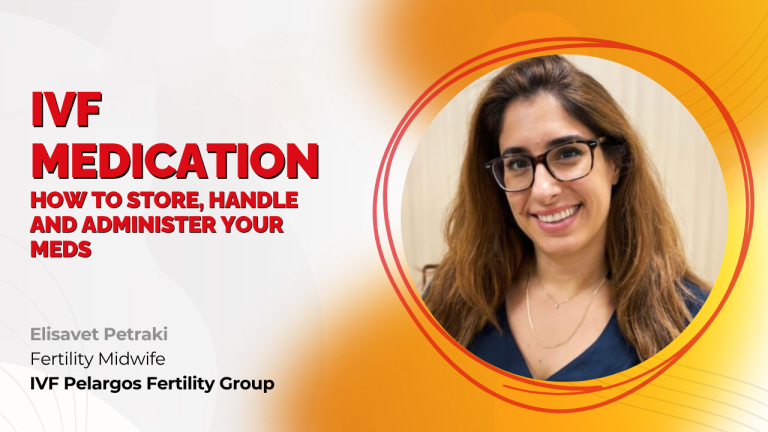


The event featured Dr Alan Thornhill, Fertility Expert and Coach, The Founder of The Fertility Guy who shares practical tips and strategies that can enhance your fertility experience, irrespective of where you are in this journey; whether at the beginning stage or have been trying for some time, his proven evidence-based techniques promise to offer you significant insights.
Dr Alan Thornhill started by explaining that there are things that clinics particularly don’t like to say. One of the things they don’t say is that statistically, more than half of all IVF cycles are unsuccessful. Therefore, you need to be aware that you’re more likely to fail than succeed, at least in the first cycle. That is something that you need to be aware of before you embark on this journey.
You also need to remember that fertility in women declines dramatically with age. So, that’s our kind of backdrop. That’s one of the reasons why these IVF cycles are unsuccessful. If we look at the emotional relationship side, there’s quite a lot of data that shows that couples are more likely to break up after a failed IVF. It does put a huge strain on the relationship. It can mean all sorts of relationships, not just the person who you call your partner.
Another aspect is that IVF is very expensive. In most countries in the world, it’s expensive, and most people need several cycles, as mentioned earlier. These are all part of expectation management. And another thing that maybe isn’t obvious, but clinics are getting busier and more business-like. That’s not necessarily a bad thing, but it can mean that you don’t always get what you want. There are more clinics, more companies, and more information sources. You’ve got to navigate your way through that. There’s availability of all this information and access to treatment, but it just makes your life more difficult because you’ve got more choices.
However, there is not always bad news, success rates improve; they seem to incrementally, and slowly improve year-on-year, and there are more treatment options, add-ons, and so on. As mentioned previously, clinics are becoming more business-like, they need to meet certain targets, and you might get dragged along the way. That is where the regulations, and guidelines come in to help. There are more and more funding and financing options available. There is also a lot of good, excellent, balanced information available. What you need to do is to be able to find it because there’s a ton of information now. It’s getting harder and harder to curate and work out what’s the good information and what’s not so good. When you’re going through a fertility journey, you’re in a difficult and vulnerable position where you want to find information that’s what you believe, and you’ll find it because there’s a lot of information out there, and it’s not all curated or checked properly.
The other good bit of news is that there is a lot more focus on patient well-being, and there’s a lot more focus on fertility coaching.
What is fertility coaching? In its simplest form, fertility coaching is about supporting people on their journey to becoming parents. There’s a lot more to becoming a parent than just IVF. There are many different styles of coaching and there are a lot of different types of coaches, including:
Some of the topics that people coach on are:
Why work with a fertility coach?
It’s important to be independent when you’re going through your IVF treatment, sometimes, people tend to be lost with the information that they receive, decisions they need to make, understanding the process, and going through all the ups and downs, that require guidance, coaching, accountability.
I think there’s a very clear way to save time and often money by working with a coach because they’re giving you that inside view and saying, “Okay, watch out for these things.” And I don’t just mean add-ons; I mean all sorts of things.
Why do you need a fertility coach?
Many times, people ask themselves and find it difficult to find answers to their queries, The most common aspects people need to think about before starting or going through their journeys are:
What are the things a Fertility Coach shouldn’t do?
You can’t be completely passive in the IVF journey or the fertility journey because there is quite a lot of stuff to know. You need to do your homework. Furthermore, you do need to learn the IVF language. You don’t need to become the world’s expert on something because you end up getting too hyper-focused on certain details. You need to know enough to ask the right questions because otherwise, you’ll get into the details, into the weeds, and you’ll miss the bigger points
When you’re looking for information, avoid a kind of sales agenda, not that commercial entities don’t provide good information; they do, but you’ve got to keep at the back of your mind that they are trying to sell something. Expect to see, in all these different sites, a lot of the same information because most of it is the same and most of it is accurate. 5 to 10% of information is different between the sites.
When your fertility treatment becomes medicalized, you’ve got a lot of questions and a lot of things where you might have to say no. When things don’t go the way you expected them to, there’s an element of complaining.
If you think the best way to compare clinics is to look at 5 different clinics and choose the one with the highest success rates or choose the one that seems to have all the best things, you’ve forgotten that their job is to sell their services. You need to understand success rates and to some degree compliance because that’s another tool you can use to work out what might be the right clinic for you. Do a visit or a free virtual consult because then you get a sense of what the clinic’s like.
It’s difficult to do, but the best way is to find a reputable non-commercial source. Beware of looking for information on Google, as it doesn’t always show you what you need and can be quite misleading.
Is SEO (search engine optimization) working for the companies? Is it working for you? Is it working against you? On average, it’s probably not working for you. It’s based in a highly competitive world; it can be a form of paid advertising, or a marketing team at a clinic or elsewhere could flood the internet with content to try and push them up the ratings. The truth is that it’s all about ratings, you don’t usually look on the 10th page, you look on the first page mainly. That’s what SEO is all about. It’s not always organic because a clinic or an institution has built a reputation in a certain way.
Be sceptical. When you’re speaking to a healthcare provider, and he/she goes silent, or you see body language you don’t like or trust, that’s a sign, and you need to listen to that. You need to use your gut instinct because, at the end of the day, that’s kind of all you have. You don’t have full information about everything; you have to trust yourself in these situations, and you’ve got to be comfortable.
Plan for more than 1 cycle. Speak to a financial planner or advisor because there are always going to be costs that you’re not anticipating. Pursue funding if you’re eligible, query things that you don’t necessarily agree to or believe in add-ons. Get a costed treatment plan. Clinics are required to do this as part of the regulations, so they’re meant to tell you how much they think it’s going to cost. Consider multicycle packages because they might work better for you. There are some money-back plans and so-called guarantees on the market, they can be useful because they can tell you a lot about what they think your chances are.
These boundaries can be physical, financial, medical, use of social media, who you communicate with—it can be a lot of different things. Self-auditing to start with: you can say what’s most important to me. Is it communication? Just rate yourself from 1 to 10. Communicate whatever you decide to your friends, family, and importantly, the clinic. Make sure that you look after yourself and seek support either from friends and family or a counselor. It’s never too late to put a boundary in place, and also, you can change it. Be firm with your boundaries, but if the environment changes or you have a mindset change, you can change it; you can be flexible.
As mentioned before, the IVF journey can be a complex situation that requires communication and boundaries. It does require understanding the process because otherwise, neither of you knows what you’re getting in for. The relationship doesn’t just mean 2 intimate partners; it can mean a wider relationship with family and friends. Make sure you support each other and make sure you fully engage.
The number of coaches is growing which also means there’s a lot of choice and more difficult decisions potentially. There are a lot of coaches online and there’s some in-clinic. They’re all different, they have different expertise and backgrounds. Find the person who has a good rapport with you, and vice versa, then you’re going to get the best working relationship. You need to trust the person. You’re going to be, sharing a lot of information with that person, and you want to know that that person’s kind on your side.
Related reading:
There’s a growing number of coaches. I do believe that in the next 5 to 10 years, there probably will be a requirement for some sort of certification and accreditation. There isn’t much at the moment, and I want to make a point because I’ve also done some other training. I’m not criticizing accreditation certification. I used to run a diagnostic lab where we had the highest standard of accreditation. I’m a big believer in standardization, accreditation, and certification, but some sorts of certification are not as good as others.
That’s not me saying that about coaching specifically, but just having a certificate does not necessarily mean you’re a great coach, it doesn’t mean a lot necessarily. However, there are some good coaching certificates. They don’t apply specifically to fertility. I don’t have one at the moment, but I am working towards one because I think it’s important, I don’t know if it’s going to make me that much better. I think it will make me better, but I think it will also show that I’m willing to get that certification and that I’m willing to improve, and I think that’s an important message.
I was doing a course on becoming a wedding celebrant because I’d done some for friends where you go and help them do their wedding, and there are some courses online, and honestly, that it was fun, but I wouldn’t call it kind of accreditation or certification. It was a little bit like Mickey Mouse, and I think there will be some coaching courses that are like that too. Be a little bit careful about going if somebody throws a certificate in front of you. I would spend the time listening to them, checking them out online, listening to them.
The true meaning of fertility consultant, if I’m understanding it correctly from the question, means a medical doctor, a consultant level, so they’ve done lots of subspecialty training, and know a lot about fertility and IVF. Anybody can help you find the right solution. Generally speaking, I would say a fertility consultant who’s a doctor is probably not doing a coaching job because they’re having to say, “This is what I need you to do. This is the treatment plan I’ve suggested for you.”
A counsellor is a very specific thing. They usually do have particular credentials, particular courses, and accreditations that they’ve done, and I think all clinics in the UK particularly have to provide access to one. They don’t necessarily have an in-house one, but they have to provide access to one. I believe it would be useful for everyone going through IVF to have some sort of fertility counselling because that sort of emotional support becomes more necessary when donor eggs and sperm are used. That becomes a regulatory requirement as well. So, a counsellor is a bit different. They tend to be related to the emotional side of things, and I don’t want to reduce them to that. I’m just saying they tend to be down that side, particularly.
A fertility coach is a bit more broad, they probably got, or it’s good if they’ve got a lot of expertise in all the areas. They understand some medical parts, they understand some scientific parts, they understand some relationship and emotional part, but they’re not necessarily claiming to be an expert in that, and their job is to help you get to the place you need to be, which might be to go and see a counsellor, it might be to go to another clinic.
For example, we’re going overseas, the doctor has suggested we do these two different methods of sperm collection. So what I did was ask: Why have you been asked to do that? That’s not standard. That’s slightly different from normal. What was the reason given? What’s the benefit to you? Is there any potential harm? How much will it cost?” Then I’ve got this package of questions that come around this difference. So, although that’s only one question type, it covers a lot of different questions.
“Which clinic should I go to? Where should I buy donor sperm from?” Those are veering into that “please recommend something for me.” And I don’t mean it brutally and nasally saying, “Oh, someone wants me to do the work for them.” I’m happy to do work for people if they say, “I would like you to do this. Here’s some money. Do this for me.” But I don’t even want to do that because I don’t think that’s the right solution for them.
“What’s the best success rate?” I’m not saying success rate price and location aren’t important; they’re all important. But you need to have that list of these things you want. So, that’s a very common, “What’s the best clinic?” And I say, “Let’s reframe it: what’s the right clinic for me?” “How should I complain? This hasn’t gone well. What should I do next?” “Setting boundaries.”
Absolutely. It sounds like you’ve already kind of decided that things aren’t going well, and that’s what we would explore together because I’m not diminishing your opinion, but if you feel like you’re wasting time and money, then that needs to change because nobody wants to feel like that. That’s what the discussion is about. It’s like, “Well, how can we rectify that?” I don’t have a magic wand. Nobody has a magic wand, but it’s about getting you back on the track that you’re happy with. That’s all I’m trying to do, that’s all I want to do.


+ 1 more answers

+ 2 more answers
Necessary cookies are absolutely essential for the website to function properly. This category only includes cookies that ensures basic functionalities and security features of the website. These cookies do not store any personal information.
Analytical cookies are used to understand how visitors interact with the website. These cookies help provide information on metrics the number of visitors, bounce rate, traffic source, etc.
| Cookie | Duration | Description |
|---|---|---|
| _ga | 2 years | This cookie is installed by Google Analytics. The cookie is used to calculate visitor, session, campaign data and keep track of site usage for the site's analytics report. The cookies store information anonymously and assign a randomly generated number to identify unique visitors. |
| _gat_UA-38575237-21 | 1 minute | No description |
| _gid | 1 day | This cookie is installed by Google Analytics. The cookie is used to store information of how visitors use a website and helps in creating an analytics report of how the website is doing. The data collected including the number visitors, the source where they have come from, and the pages visted in an anonymous form. |
Any cookies that may not be particularly necessary for the website to function and is used specifically to collect user personal data via analytics, ads, other embedded contents are termed as non-necessary cookies. It is mandatory to procure user consent prior to running these cookies on your website.
Other uncategorized cookies are those that are being analyzed and have not been classified into a category as yet.
| Cookie | Duration | Description |
|---|---|---|
| _gat_FSQM52 | 1 minute | No description |
| cf_ob_info | No description | |
| cf_use_ob | No description |