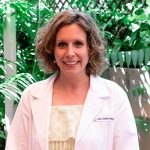
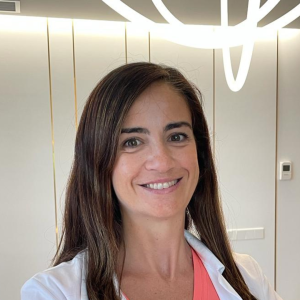
During our Patient Meeting with Prof. Evangelos Papanikolaou, PhD, Co-Founder & Reproductive Medicine Specialist at Assisting Nature, Greece, we explored the medical, emotional, and practical aspects of navigating repeated IVF failures challenges, and how to move forward.
Hosted by: Jessica Bourke, ‘The Fertility Detective’ — a fertility expert with nearly 20 years of experience, TEDx speaker, and creator of Making Sense of Miscarriage™ and Fertility ReSet 2.0™.
In this session, we explored: Why IVF cycles might fail, Tests and diagnostics worth considering, when to rethink protocols or change clinics, what real-life success after failure can look like.
We know, and via published guidelines, that almost none of the add-ons have been proven to work. EmbryoGlue doesn’t work. I have to say this. Regarding aspirin or heparin, I’m not against them. Although the chances of thrombophilia are low, even the tests we perform cannot exclude the possibility that someone doesn’t have thrombophilia (thrombophilia refers to blood clotting and its potential impact on pregnancy). We have to make this clear to patients: if they undergo thrombophilia testing and it’s negative, it does not mean we’ve tested for all the known genes.
It’s only about 60%, actually—not even 80 or 90%.
So, if I’ve been tested for thrombophilia and it’s negative, and I’ve already had 2 miscarriages, it’s not a mistake to take heparin. A lot of colleagues disagree, especially in England or the Netherlands, because they think differently. Sometimes, something that is not supported by evidence doesn’t mean the studies we have are perfect. When we don’t have evidence for something, it doesn’t immediately mean it’s wrong. On the other hand, when I have evidence against something, and I continue to use it—like EmbryoGlue—then something is wrong.
If she transfers 1 blastocyst, the chance is 33%. If she transfers 2 blastocysts, the chance is 50% for an ongoing pregnancy. So the outlook is quite good. Regarding corticosteroids: There is no solid evidence, but many studies exist. When you see controversy in the literature, you don’t really know what happens in the real world. Getting 8 or 10 milligrams of prednisolone these are therapeutic dose. They should not be afraid. Actually, they have no impact on our system, but they can tamper with my immune system if I have a predisposition for autoimmune diseases, although I have not developed them yet.
I go to higher doses only if we have tested for natural killers on the endometrium, or if we have more than three or four miscarriages. Then I have to take into consideration giving real doses.
IVF failure occurs when we have more than 4 or 6 blastocysts transferred. Now the problem starts. If I’m a PCO lady who produced 17 eggs and had 6 blastocysts, and I failed with all 6, am I a multiple IVF failure, especially if I transferred them one by one? The reality is I’m not a failure because I just failed in one situation. A better definition is: if I have more than 4 or 6 blastocysts transferred within 3 cycles—3 stimulations.
Yes, definitely. We have to clarify this. Our patients need to realise that even if I’m less than 35, the chances of producing at least 1 euploid egg are only 50%. So, for the rest—50% of young patients—they will have abnormal eggs. So even if they have 2 or 10 blastocysts, they may still fail.
They will fail. That means nothing—just from one stimulation. That’s why we talk about “repeated” IVF failure—it should take into account 2 or 3 stimulations.
No, this definition is with no tested embryos. With tested embryos, there is no formal definition yet for multiple PGD IVF failures. I believe the perfect definition would be: if I have more than 3 or 4 euploid blastocysts that did not implant, then yes, it is repeated failure.
Without knowing the genetic status of my embryos, I don’t think the patient should feel disappointed or label themselves a failure. As long as my embryos are not tested, I cannot categorise myself as a failure, even if I fail 3 times. In reality, if I have not tested my embryos, I cannot blame my body for rejecting them or not accepting them.
Yes. And 80% is the embryo. Only 20% is the environment—my hormone profile, my endocrine system, my immune system. I cannot really blame my endocrine or immune system if I don’t know what kind of embryos I transferred.
Definitely. Coming back to your age distinction, I think that after the age of 40, failure is the norm. That doesn’t mean I won’t look into the uterus with hysteroscopy, or check the microbiome, or thyroid. But after 40, it is normal to fail. When a patient is under 36 and there are more than 3 blastocysts that are not implanting at all, then we need to dig deeper into the reasons for this non-implantation.
The younger you are and the more you fail with good blastocysts, the more you need to consider if there’s something wrong, either with the embryo or my environment. If I transfer more than 3 or 4 blastocysts and you’re under 36 and have to repeat IVF, in the same centre or another one, I would 100% recommend preimplantation genetic testing.
After the first—or second—single blastocyst transfer that fails, you should get an alarm. One failed blastocyst transfer means nothing. But if a second blastocyst—especially a high-grade one—doesn’t even result in a biochemical pregnancy, the doctor should get an alarm. Even if I have 4 more blastocysts in the freezer and I’m 30, it doesn’t mean anything. I’m not an animal to undergo repeated embryo transfers. We are humans. We have to consider the psychology of the patient, who is already disturbed.
We know, and via published guidelines, that almost none of the add-ons have been proven to work. EmbryoGlue definitely doesn’t work. I have to say this.
Regarding aspirin or heparin, I’m not against them. Although the chances of thrombophilia are low, even the tests we do cannot exclude that someone does have thrombophilia (thrombophilia refers to blood clotting and the impact that could have in pregnancy). We have to make this clear to patients: if they undergo thrombophilia testing and it’s negative, it does not mean we’ve tested for all the known genes. It’s only about 60%, actually—not even 80 or 90%.
Getting heparin actually has no negative impact on implantation. If I’ve been tested for thrombophilia and it’s negative, and I’ve already had 2 miscarriages, it’s not a mistake to take heparin. A lot of colleagues disagree, especially in England or the Netherlands, because they think differently.
Sometimes, something that is not supported by evidence doesn’t mean the studies we have are perfect.
When we don’t have evidence for something, it doesn’t immediately mean it’s wrong. On the other hand, when I have evidence against something, and I continue to use it—like EmbryoGlue—then something is wrong.
If you transfer 1 blastocyst, the chance is 33%. If you transfer 2 blastocysts, the chance is 50% for an ongoing pregnancy. So the outlook is quite good.
Regarding corticosteroids: There is no solid evidence, but many studies exist. When you see controversy in the literature, you don’t really know what happens in the real world. Getting 8 or 10 milligrams of prednisolone these are therapeutic dose. They should not be afraid. Actually, they have no impact on our system, but they can tamper with my immune system if I have a predisposition for autoimmune diseases, although I have not developed them yet.
I always use corticosteroids, especially after two failures or after two miscarriages, even if I have not found any autoimmune marker. But if I have found an autoimmune marker, like ANA (antinuclear antibodies), or I have found some other antibodies, then I always use corticosteroids from the first cycle, from the first transfer.
I go to higher doses only if we have tested for natural killers on the endometrium, or if we have more than three or four miscarriages. Then I have to take into consideration giving real doses.
Intralipid is another interesting topic. I read the literature seven or eight years ago before I started using it. I was impressed. It’s very safe. We give it in the intensive care unit just to replace food. It’s parenteral nutrition—it has lipids and calories for when someone is unconscious.
As long as someone isn’t allergic to soy or egg, there is no issue. The only drawback is that it can induce allergic reactions in some patients. So it’s wise to have an anaesthesiologist present in the unit when it’s administered for the first time, just in case of allergic shock, not in the doctor’s office. That’s not correct.
I use it only for recurrent miscarriage, not for multiple IVF failures. Miscarriage and IVF failure are 2 different topics. We have to clarify that. When I gave it for recurrent miscarriage, my first three patients got pregnant and delivered. They used to get pregnant, but the problem was the miscarriage. But then, the next five patients didn’t deliver. So after these first eight patients, I didn’t stop using it, but I still use it only in recurrent miscarriage. I feel it should be part of the protocol.
Even if it helps one out of ten patients, without being risky, I will give it. Intralipid is in a different category from add-ons like EmbryoGlue. With EmbryoGlue, we have many studies. With intralipid, unfortunately, the studies are few and small. You cannot judge from them. My experience in recurrent miscarriage, not IVF failure, is that it’s better to include it.
Exactly. Unfortunately, we cannot do randomised controlled studies in these patients. None of them would want to volunteer. Especially after PGD, we don’t have such studies.
The ideal would be to do PGD and then randomise one group to take aspirin, another not; one group to take intralipid, another not. Some take two things, some none. That would be a dream for research, but not for patients. We don’t have enough patients, and no one would agree to be enrolled after 4 IVF failures or miscarriages. They’d leave the clinic, even if everything was free.
When I’m under 40 and have no embryos, you cannot exclude the role of the sperm. Every year, I have 2 or 3 patients who go through egg donation, but the real cause is sperm.
Egg donation is the best biological test for sperm. It’s a class test for husbands. With young donor eggs, we can see if the sperm is functional. It’s one thing to have motile sperm, excellent morphology, or to do ICSI. It’s another thing entirely when you cannot make blastocysts with young donor eggs.
If I have less than 3 million sperm and high DNA fragmentation, I propose, before starting egg donation, to do a natural or mild IVF cycle with her own eggs and donor sperm. I discuss with the couple to agree as three parties. I ask the husband to give her a good opportunity with her last eggs.
If it fails, then we will use your sperm with donor eggs once we move to egg donation. So you give something, and we take back something. I can tell you that I have a 20% delivery rate just by switching the sperm before embarking on egg donation. In the last 10 years, I’ve used this counselling, and I’m glad because I saved some ladies with low AMH and many IVF cycles. They moved to donation just because we changed the sperm. I’m really glad to say that the majority of husbands agree to this three-party agreement.
I sacrifice my sperm that looks normal for IVF, and if we don’t succeed, then we move to egg donation with my sperm again. With my sperm, I have a very low blastulation rate, and I fail, so the second donation will be with donor sperm as well — both donors.
All of these patients have an endo-ultrasound for varicocele and for microorganisms in their sperm. We do DNA fragmentation, semen analysis, we do everything. We have to make it clear that, at least in Greece, we perform all the tests, since the person is paying, and the tests are rational regarding the cost. A FISH test here costs only €500. So why not perform it?
Because if I find 5% of them having genetically abnormal sperm, either we do preimplantation genetic testing right away, or we change the sperm to a donor. This 5% of patients will save time, money, and emotions.
First, let’s clarify that there are 3 kinds of clinics in the world:
Those who believe in PGT-A and do it appropriately. If done correctly, there’s less than 5% damage to the embryo, and the ongoing pregnancy rate is the same as with egg donation, about 48–50% with a euploid embryo.
Those who don’t do it correctly and are honest, don’t suggest it.
Those who don’t do it correctly but still suggest it because they don’t want to lose the patient.
We don’t know if this clinic in Ireland is sincere and afraid to do it, or in the last category.
Regarding frozen embryos, that’s a different story. Mosaicism can happen in both fresh and frozen embryos. Now, we have good algorithms, and we transfer almost 50% of mosaics, with about a 30% ongoing pregnancy rate. Even if we find a mosaic, it’s not a big deal nowadays. If it’s a low-level mosaic, less than 20%, it’s still considered transferable, with an over 30% pregnancy rate.
However, when we biopsy a thawed embryo, the risk rises from 5% to 20–50%, depending on who performs the biopsy. For this patient, I would suggest doing the biopsy, but only if the centre is PGD-friendly and experienced.
If the patient doesn’t know the clinic’s skill level, it’s better not to do it.
Yes. The inner cell mass is the most important. It is the real initiation of the human. What we test in PGD is the trophectoderm, the placenta. That’s the advantage and the drawback of PGD. We don’t damage the inner cell mass, but the trophectoderm may not reflect the embryo accurately. That’s where we get mosaics. So if, in the future, we find a way to test the inner cell mass without harming the embryo, everyone will do PGD.
We cannot blame PGD at this moment. It’s still a maturing science. In the coming years, maybe 10 to 20 years with artificial intelligence or non-invasive PGD, we will have a reliable index for embryo quality. Maybe using the culture media or blastocoelic fluid, or a combination. Then, we will know the real state of the inner cell mass. Everyone will use that. Only good mosaic embryos will be selected for transfer.
I think that you really should start worrying a little bit because you had your first euploid not being successful. I think you should undergo hysteroscopy 100% if you haven’t so far. You should perform microbiome testing 100% if you haven’t performed it so far. Then, you can discuss with your doctor about other tests, but these 2 you should undergo 100%.
Definitely only from the endometrium. I also have to clarify here that ideally, we have to perform the microbiome test again after the treatment we give. So, just getting a treatment and not repeating the microbiome to see if it changed means nothing.
On the other hand, 90% lactobacillus is really too high. For my patients, if they have 75% or 80%, I’m not disturbed. I’m happy enough. But when I see 50% or 35% lactobacillus, then it’s really terrifying. It means something. I have to admit, I did not believe so much in microbiome until recently.
I had a patient from London. We had 2 failed IVFs with 4 blastocysts, 2 and 2. We performed a 3rd IVF with only 1 blastocyst failure again.
We did PGD after 3 IVF failures. In Greece, you can do PGD only once you reach 39, or if you have more than 2 or 3 blastocyst failures before that age, they give you the license.
We did PGD, and she asked for microbiome testing. I was negative, you know, I didn’t believe in this, etc. We did the microbiome, and she had 35% lactobacillus. She took medication, we repeated the microbiome, and it became 75%. Of course, it did not become 90%. With the first euploid blastocyst, she became pregnant immediately.
There was domination, I think, from Streptococcus if I remember well. There was another species present. But it was amazing that with the first euploid blastocyst, she became immediately pregnant. How can I ignore this? I cannot ignore this.
When I see 70% lactobacillus, I’m not going to cry with my patient again. I don’t think it’s pathological. If you also see in the vaginal swabs a kind of inflammation, then you have to reconsider.
Yes. An endometrial scratch is very different from EmbryoGlue. I tell my patients that if the inventor of EmbryoGlue had seen real increases in results, he would have won a Nobel Prize. The Nobel Prize has not been given to the inventor of EmbryoGlue, so let’s forget it.
In favour of endometrial scratching, we have run studies, randomised and meta-analyses. It’s different to do scratching with a biopsy catheter than via hysteroscopy. It’s not at all the same. I’m talking about scratching with an endoscopic scissor in the fundus of the uterus. This increases pregnancy rates by 10% in egg donation cycles. This is from one of our original articles. From 50% to 60%. So I cannot ignore scratching. Every year, after a simple hysteroscopy before the transfer and the scratching, I have at least 10 patients who become pregnant spontaneously. Patients conceive spontaneously just after hysteroscopic scratching. How can I ignore this?
Yes. Inflammation. It’s inflammatory factors that assist implantation in the coming transfers, whether the embryo is conceived via ART or via sex.
If you are 45, 50% is not unrealistic. It is completely fake if you are 45. If you are 40, yes, you have 40% in every cycle. So repeatedly, cumulatively, within 3 IVF cycles, the cumulative delivery rate of a lady at 40–41 is 50%. That’s after 3 IVF cycles, not 3 transfers, 3 IVF. At 45, the chances of getting pregnant are 0.8%. It’s a big change. I think you should have moved to a clinic much earlier, performing blastocyst culture and preimplantation genetic testing.
If she really wants to try, yes, you can try, but with PGT-A, 100%. This is another advantage of genetic testing: once I get a report showing that my embryos are abnormal, I can more easily decide to move to egg donation. I see it in a report, not just from words during consultation.
You can try. At most, 2 more trials, for this 1% via preimplantation genetic testing. If all the embryos are abnormal, then you should move immediately to egg donation. Being realistic, it’s only less than 1% at the age of 45.
Let me mention that in all these years, I’ve only had 1 patient become pregnant at 46. So, the chances at 46 are 1 in 1000. At 47, it’s almost 0.
Which patients still produce embryos after 43? PCOS patients. Those were the ones. Because they take revenge for what they suffered all these years. Only these women can produce euploid embryos around 45.
Every year, I have one or two patients who become spontaneously pregnant with an AMH of 0.01. Until the last day before menopause, you don’t know if you will produce a euploid egg. You just need a normal sexual life, of course, for spontaneous conception. It’s the same for IVF. Even if your AMH is 0.01, you never know if you can produce a euploid egg. But you have to believe, while knowing the chances are extremely low.
If I am psychologically stable and economically stable, then I can try. I can chase my dream. On the other hand, reproductive specialists should be here to put a stop to it. Whether the patient likes it or not. The majority will respect it — that someone draws the line for when they should stop trying. Unfortunately, in university settings and state hospitals in Europe, this line is drawn much earlier, either because the doctors are not experienced, or they have barriers, or they’re not open. In private clinics, they promise everything, like the promised land. They don’t want to lose you as a patient.
I can understand patients; they don’t know who to believe. The university professor who says go to egg donation after 2 failed IVFs at 42, or the private clinic that tells you they’ll put all the EmbryoGlue of the world in your uterus at 45, and you’ll get pregnant.
Patients have to fight against 2 different opinions. That’s why there’s MyIVFAnswers, the internet, Facebook, and Instagram to find who is telling the truth. Not the best embryological magic technique, but the truth and what is really scientific.
I think it’s not time to move into egg donation, you’re only 40. We don’t know your AMH, of course. I completely disagree with her opinion about PGD. When the embryos are aneuploid, 90% are aneuploid. Regarding mosaic embryos, we don’t discard them, but we transfer 50% of them. Of course, there is a risk depending on the embryologist doing the biopsy. Unfortunately, you don’t know who is experienced and who isn’t, and you’ll never find out at your clinic or others.
Definitely, for you, after PGT-A, if all embryos are abnormal, I might consider changing the sperm. If there’s severe male factor and DNA fragmentation over 50%, I would consider, within the concept of a three-party agreement I discussed earlier, using donor sperm. Not this time, but after abnormal PGD results.
If you can know how PGD-experienced the clinic is, if they perform more than 100 cycles a year, then normally they should be experienced. The hand becomes experienced. That means PGD is done almost every day. You should believe in PGT-A.
On the other hand, you can still transfer an aneuploid embryo. Once every 5 years, I have a patient who wants to transfer their aneuploid embryos, so they don’t feel they’re losing something. If you don’t believe so much in science, do the test. If they’re all abnormal, give them a try. Then, when you do D&C and get a cytogenetic result, you’ll know you did wrong.
Not all genetic labs are perfect. Just because they undergo ISO control doesn’t mean the testing is perfect. There are published reports, especially from the U.S., showing big variations in genetic reporting. So, imagine what happens in other countries.
The full sperm tests are:
FISH is a karyotype on the sperm, counting the chromosomes using fluorescent probes on 500 spermatozoa to see how many of them are abnormal. These are the 4 tests for sperm.
If we have a genetic abnormality, then 100% we should do PGT, irrespective of the age of the lady. If we have a FISH-positive result, which is quite rare, but it does happen. Regarding DNA fragmentation, the answer is very easy. Irrespective of the treatment, we give vitamins, but we don’t treat the DNA fragmentation. It’s pointless if my husband continues smoking and the next day takes expensive vitamins and alcohol and works in a factory surrounded by chemicals.
In this scenario, if DNA fragmentation has not decreased, then we perform PICSI or ZyMot. These are sperm selection techniques. We perform an additional selection of the sperm, not only under the microscope or with higher magnification (PICSI), but also using ZyMot, a test for deselecting fragmented spermatozoa. You can pick the best sperm from a bad batch. You have better chances of success, at least with sperm that is not fragmented. There is a solution.


+ 2 more answers
Necessary cookies are absolutely essential for the website to function properly. This category only includes cookies that ensures basic functionalities and security features of the website. These cookies do not store any personal information.
Analytical cookies are used to understand how visitors interact with the website. These cookies help provide information on metrics the number of visitors, bounce rate, traffic source, etc.
| Cookie | Duration | Description |
|---|---|---|
| _ga | 2 years | This cookie is installed by Google Analytics. The cookie is used to calculate visitor, session, campaign data and keep track of site usage for the site's analytics report. The cookies store information anonymously and assign a randomly generated number to identify unique visitors. |
| _gat_UA-38575237-21 | 1 minute | No description |
| _gid | 1 day | This cookie is installed by Google Analytics. The cookie is used to store information of how visitors use a website and helps in creating an analytics report of how the website is doing. The data collected including the number visitors, the source where they have come from, and the pages visted in an anonymous form. |
Any cookies that may not be particularly necessary for the website to function and is used specifically to collect user personal data via analytics, ads, other embedded contents are termed as non-necessary cookies. It is mandatory to procure user consent prior to running these cookies on your website.
Other uncategorized cookies are those that are being analyzed and have not been classified into a category as yet.
| Cookie | Duration | Description |
|---|---|---|
| _gat_FSQM52 | 1 minute | No description |
| cf_ob_info | No description | |
| cf_use_ob | No description |