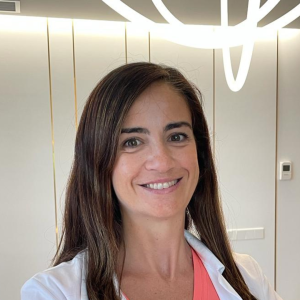
Watch the webinar with Dr Irina Kotsiubska, an obstetrician-gynaecologist, and fertility specialist in Assisted Reproductive Technologies at Parens, Ukraine, and find out how to have a successful IVF treatment after failed attempts.
There are several frequently asked questions after failed attempts that patients ask, and these include:
It is important to have in mind that the process is going to be vastly different for a couple who has spontaneous natural conception attempts than a couple who has been through some conservative treatment, including:
What is more, it is also going to be different for a couple who has been through an IVF cycle with stimulation of the ovaries and especially challenging for a couple who has been through a cycle with donated gametes unsuccessfully. Any future steps and treatment plans should be based on the following aspects:
In the case of the male factor, there are several techniques available that can increase the chances of success. These include:
In case none other treatments work, treatment with donated oocytes is recommended as well as sperm donation in the most severe cases, surrogacy might be also considered.
As Dr Kotsiubska mentioned, Parens Clinic does have its own egg donor bank, that way the donors are thoroughly screened, and the quality can be controlled.
To become an egg donor, any woman must meet the following criteria:
In Ukraine, they also can suggest a different type of treatment, not available in all countries, which is called tandem cycle. What is a tandem cycle? Tandem IVF Cycle, is a fertility treatment where both the expectant mother’s eggs and donor’s eggs are used to create embryos for implantation. Both normal IVF treatment and egg donation IVF treatment are performed together. What are the indications for a Tandem cycle?
If patients are experiencing unsuccessful IVF treatment options, another option that can be suggested is genetic testing called PGT-A (Preimplantation Genetic Testing for Aneuploidy). A few cells are removed from an embryo to help select the best embryo(s) to avoid a genetic disease for which a couple is at risk.
Related reading:
You received 5 good quality embryos. In our clinics, we very often use embryos of AA, but during our practice, sometimes, it’s better to receive the embryos of 4BB because remember that an embryo of 5AA is very hard to get, and not all can give us the implantation. Sometimes when we see a good quality embryo, the genetic analysis might not be good even if we have 5AA embryos. About, CC embryos, those are of very low quality, and very rarely they can give us pregnancy. It’s better to do a transfer with embryo 3 or 4 BB or 5 BB or BA, such embryos, can give us a pregnancy.
It depends on the stage of your endometriosis. If it isn’t too severe, there is no difficulty in your uterus, it shouldn’t be a big problem for receiving a pregnancy. First of all, I would like to ask you if you ever did a hysteroscopy, and if everything was okay during hysteroscopy, you can try again to do a transfer. If everything is okay with your endometrium, I don’t think that endometriosis will be a big problem because, in our practice, a lot of patients with this disease receive their own pregnancy after an IVF program. It depends on a hysteroscopy picture, and I would like to see your hysteroscopy results if you’ve ever done this.
In your case, I would advise you to do another donor program. It might be better to take another donor. Maybe you have had some problems with sperm analysis of your husband because if you use a donor, you would have received more good embryos, 2 or 3 embryos. In general, when we receive eight eggs, we receive a good blastocyst by 40%. In this case, I would like to see a sperm analysis of your husband.
When it comes to supplements, we always prescribe folic acid and vitamin E, Omega-3, and vitamin D. When it comes to other vitamins, it would be better to take it one month or three months before pregnancy, a lot of various vitamins are available, and you can find them in different countries. We don’t prescribe folate, we prescribe folic acid.
I prefer nospa or papaverine, but it depends on the week. If we speak only after a transfer, it will be better to use only Magne B6, it will be enough, and when we have some problems after a transfer, in this case, we’ve just got another medication like Nospa, or some other ones.
We also use EmbryoGlue, and in my opinion, it is very good. We use this culture for the patients who are over 35 when we receive few embryos or few oocytes, and if you’ve had unsuccessful IVF treatment before.
No, we don’t perform such transfers at our clinic.
If it’s only a problem with a low sperm count, we can propose a tandem program, using your husband’s sperm and from donor sperm. We could also suggest doing a PGT analysis of your blastocyst using sperm from your husband. If you have a good quality blastocyst, a genetic test might still be good because you might see a good quality blastocyst, but still, you might be receiving not a very good genetic analysis. We can propose a genetic analysis or using a tandem program.
If we speak about the IVF cycle, during stimulation, we monitor progesterone levels and estradiol levels. We need to decide if we do transfer in the same cycle or if we need to do transfer in the next menstrual cycle. When we do the transfer, in the next menstrual cycle, sometimes we prescribe progesterone, if it’s necessary, it all depends on each patient’s history, and we start it during the preparation of the endometrium or after embryo transfer. If we think that you can have a low progesterone level after embryo transfer. When it comes to patients from abroad before the program, during the program, we always speak with our patients, either by mail, messenger, WhatsApp, and we give them our recommendation or prescription during the whole program and during pregnancy.
Yes, sometimes, I recommend steroids to patients who have multiple sclerosis to help the implantation, but it depends on the patient. There are many other medications that we prescribe in this case.



+ 3 more answers
Necessary cookies are absolutely essential for the website to function properly. This category only includes cookies that ensures basic functionalities and security features of the website. These cookies do not store any personal information.
Analytical cookies are used to understand how visitors interact with the website. These cookies help provide information on metrics the number of visitors, bounce rate, traffic source, etc.
| Cookie | Duration | Description |
|---|---|---|
| _ga | 2 years | This cookie is installed by Google Analytics. The cookie is used to calculate visitor, session, campaign data and keep track of site usage for the site's analytics report. The cookies store information anonymously and assign a randomly generated number to identify unique visitors. |
| _gat_UA-38575237-21 | 1 minute | No description |
| _gid | 1 day | This cookie is installed by Google Analytics. The cookie is used to store information of how visitors use a website and helps in creating an analytics report of how the website is doing. The data collected including the number visitors, the source where they have come from, and the pages visted in an anonymous form. |
Any cookies that may not be particularly necessary for the website to function and is used specifically to collect user personal data via analytics, ads, other embedded contents are termed as non-necessary cookies. It is mandatory to procure user consent prior to running these cookies on your website.
Other uncategorized cookies are those that are being analyzed and have not been classified into a category as yet.
| Cookie | Duration | Description |
|---|---|---|
| _gat_FSQM52 | 1 minute | No description |
| cf_ob_info | No description | |
| cf_use_ob | No description |